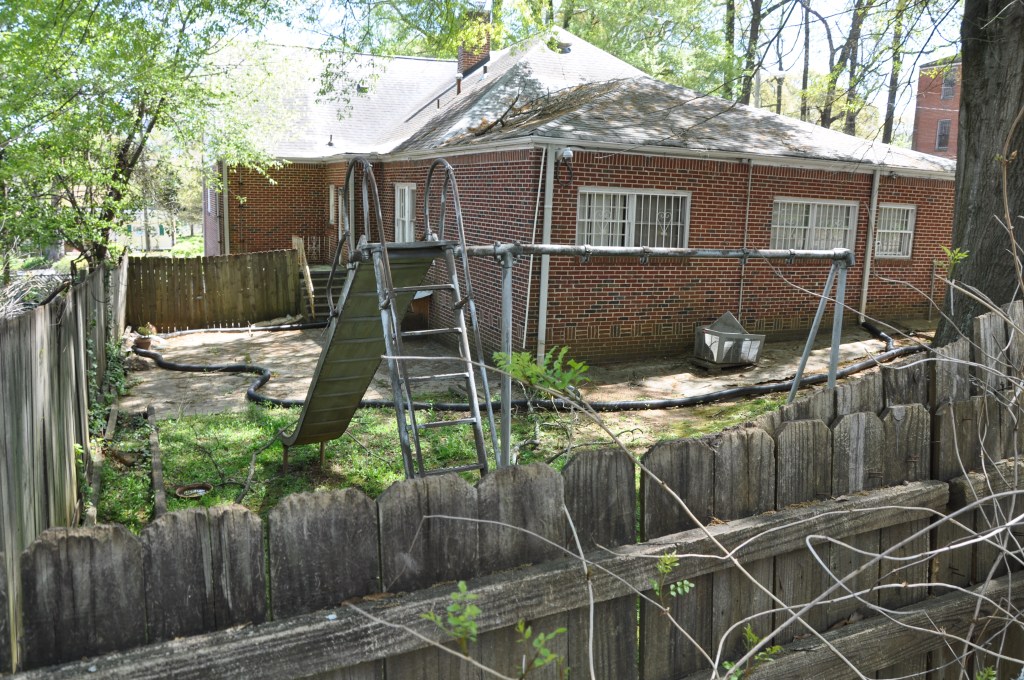
Atlanta- This is the backyard at the home Dr. King bought for his family. Something about this swing set really gets to me. I picture him laughing with his small children and being a regular person and it reminds me any one of us could change the world.

I’ve visited his birth home, Ebenezer Baptist Church, The King Center for Nonviolent Social Change, and The Center for Civil and Human Rights, but I didn’t find him there the way I found him on Sunset Avenue. Those formalized settings introduced me to MLK the Legend, the Icon, the man whose work is larger-than-life. On Sunset Avenue, I found a person, a regular person. Someone who was fed up with the ways things were and decided to do everything in his power to change it. An everyday person, like any of the rest of us.
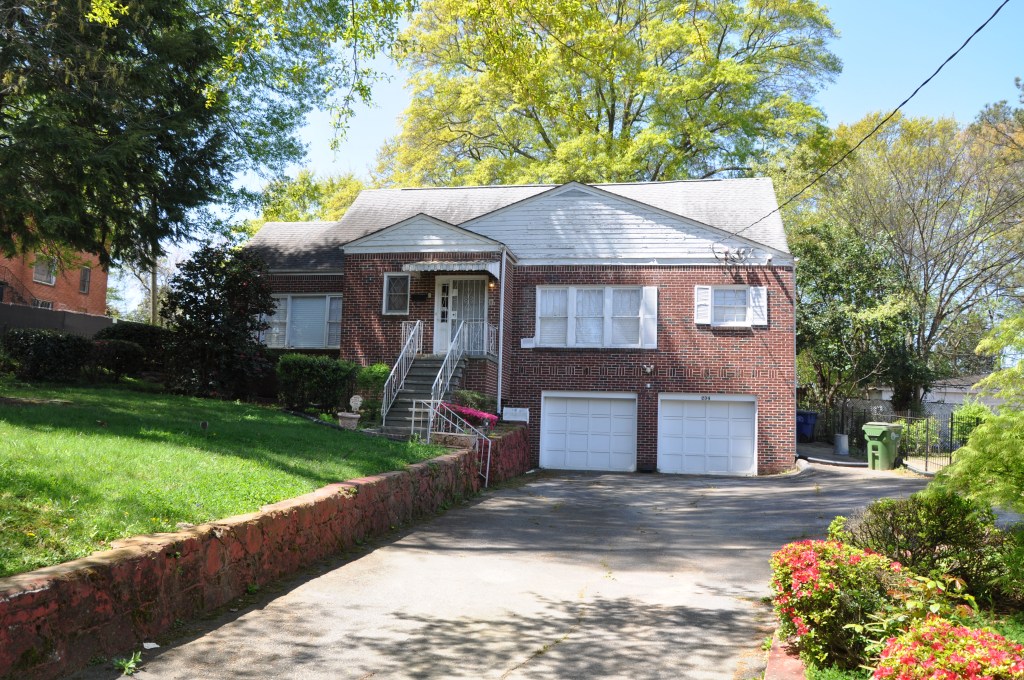
The house is made of brick and sits back from the street. The long driveway dominates the view as it makes a path to the two-car garage. The home feels functional and private. I feel deep reverence for this place. I first visited as an undergraduate Sociology student struggling with what I was learning about Atlanta’s history of racial violence. I desperately needed to know how one continues to strive against seemingly insurmountable forces.
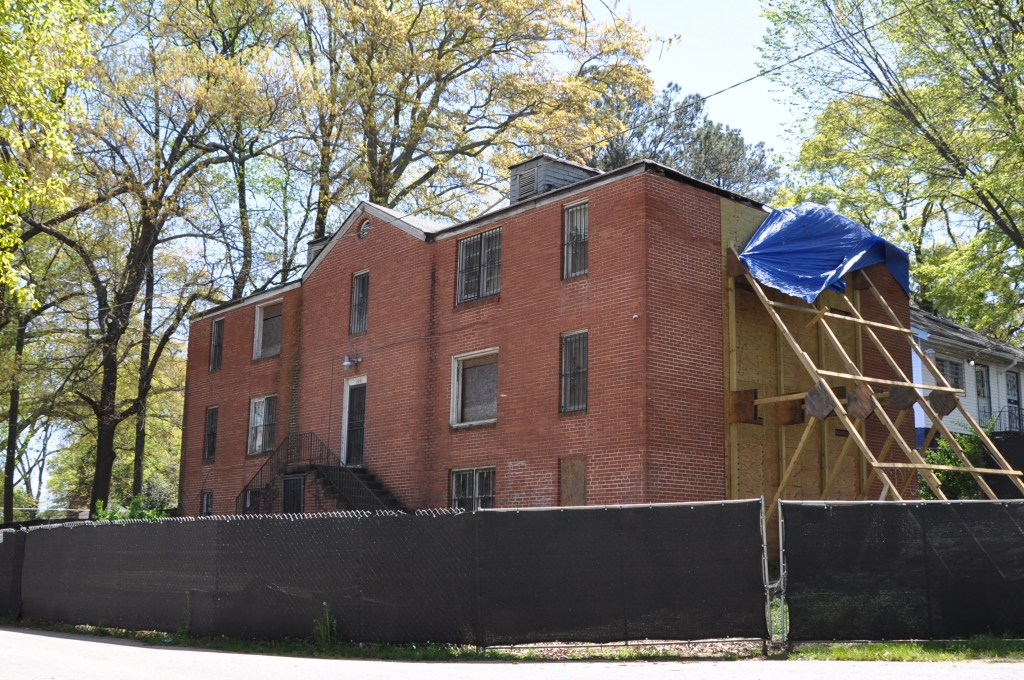
The King family purchased this home in 1965, after renting it for a year. Reports are that Dr. King was wary of ownership, and that it was Mrs. King who insisted, so they put the house in her name. It is situated a few blocks from the cluster of HBCUs that make up the Atlanta University Center, and the original Paschal’s Restaurant and hotel, where Dr. King met regularly and planned much of the Civil Rights Movement and Poor People’s Campaign. Next door is a three-story brick apartment building, currently boarded and decaying, where Maynard Jackson grew up.
The backyard seems small, but secure with its wooden privacy fence. The old swing set dominates the space and I wonder why it remains. The children would have outgrown it decades earlier, so I imagine it carried a sentimental value. Perhaps Dr. King picked it out or the assembly was a favorite family memory. Raised beds and a small shed were installed around it, and portions of the back and side yards were paved to control runoff, but the swing set remained. Maybe Mrs. King liked to remember her husband playing with their small children or perhaps this is the only place the children have actual memories of their father. Its presence lets me imagine Dr. King in ways his larger-than-life legacy does not.

After his murder, Mrs. King remained in their home. In the weeks that followed, she would envision a “living memorial filled with all the vitality that was his, a center of human endeavor, committed to the causes for which he lived and died” and create The King Center in the basement, securing nonprofit status before the year was out. Within a few years, she would buy the apartment building next door and run The King Center offices from there. Her progress would be swift and steady, creating what is now a 23-acre facility managed by the National Park Service.

Their neighborhood would suffer from destructive policy and disinvestment for decades. The State has failed to help the cluster of HBCUs navigate challenging times and the lush campus and its historic buildings are crumbling; appalling because we know they would never similarly ignore the University of Georgia. The drug trade moved in and suddenly a block was all that separated the family home from the hot area known as Tha Bluff. A series of break-ins prompted Oprah Winfrey to move Mrs. King into a 39th floor penthouse apartment in Buckhead in 2005. The next year, neighbor Kathryn Johnston would be murdered in her home when the police drug squad burst in with a no-knock warrant. The subprime mortgage scandal would hit the area hard, the Federal government bailed out the banks that caused the problem, but left the neighborhood in ruins. Today, a few small investments in infrastructure would empower the people and stabilize the community, but proposal after proposal has been ignored. The City did manage to demolish part of the street named in his honor and to divert $33 million in tax revenues approved for other uses to build a pedestrian walkway to the $1.5 billion stadium, all located less than a mile away.

When Mrs. King passed in 2006, she was interred with her husband at The King Center. Their children have continued to serve the community and have expanded the King family legacy to recognize all that their mother accomplished. The family home was recently sold to the National Park Service and will soon be open to the public for tours. I will miss this version of the neighborhood, but hope the change will bring us closer to realizing the Beloved Community. Dr. and Mrs. King believed we can be better than what we are and carried us forward as far as they could, its our job to pick up the baton. They taught us regular people can change the world, let’s get to work.
“Life’s most persistent and urgent question is, ‘What are you doing for others?’”

Notes
https://www.georgiaencyclopedia.org/articles/history-archaeology/king-center
https://thekingcenter.org/about-tkc/
https://thekingcenter.org/the-king-center-acts-to-preserve-220-sunset-avenue/
 Debby Yoder