The Ruins

Saturday, February 9, 2013
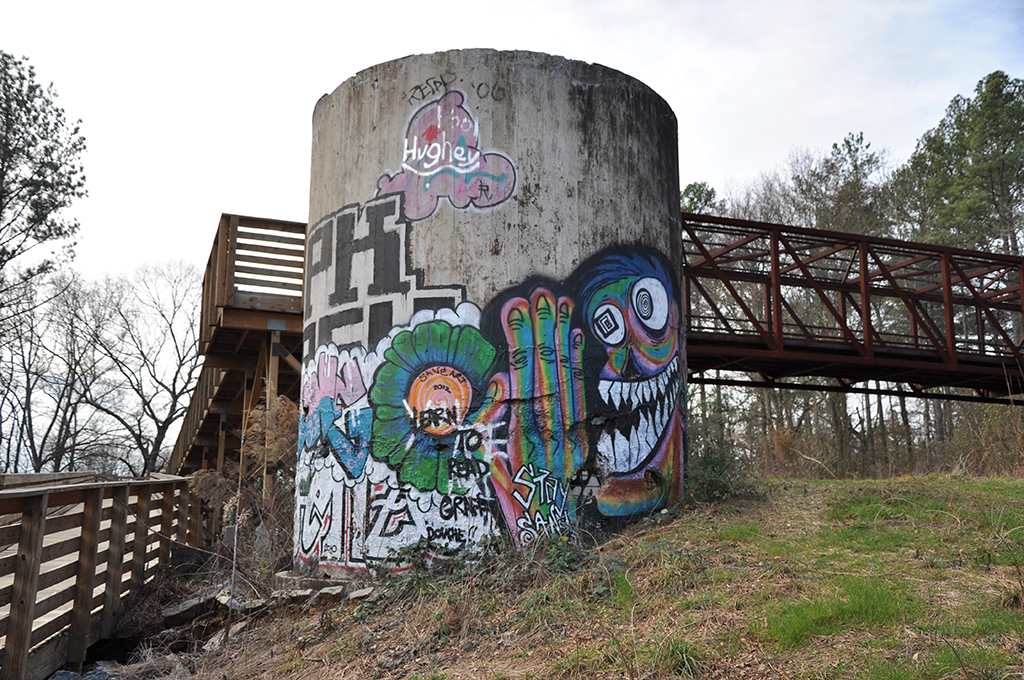
Posted by Debby and Hubert Yoder, DECATUR, GA — Just off the busy Clairmont Road corridor in Decatur lies Mason Mill Park, a neighborhood green space with a very interesting history. Not far from Emory University, it sits adjacent to a public library and provides playgrounds, tennis courts, and walking trails. The park expanded not too long ago and now includes an expansive paved walkway that winds its way down to what’s known as The Ruins. 

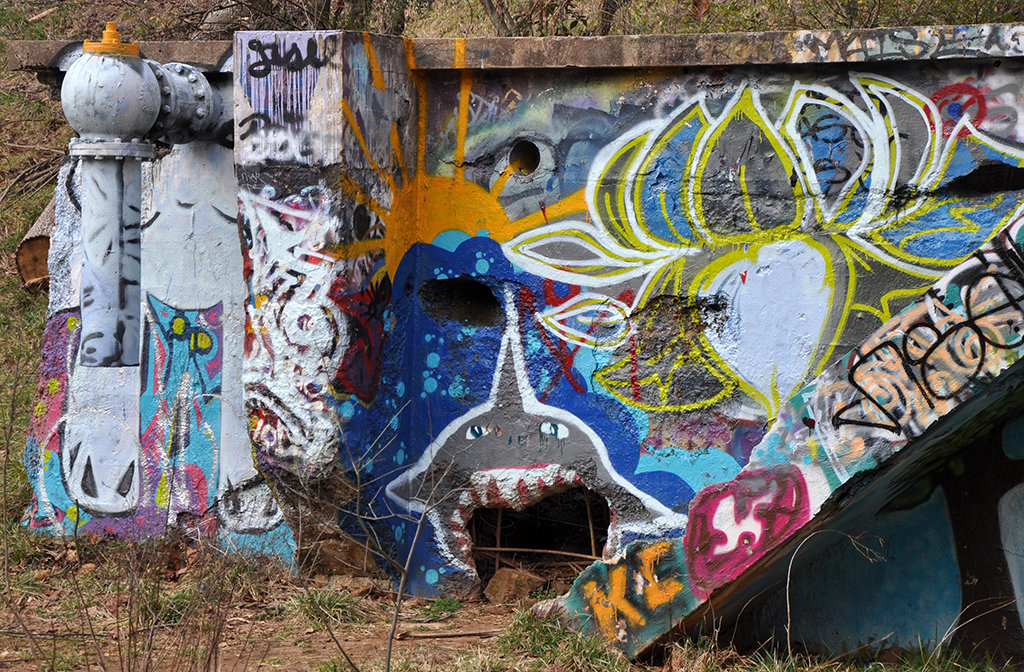
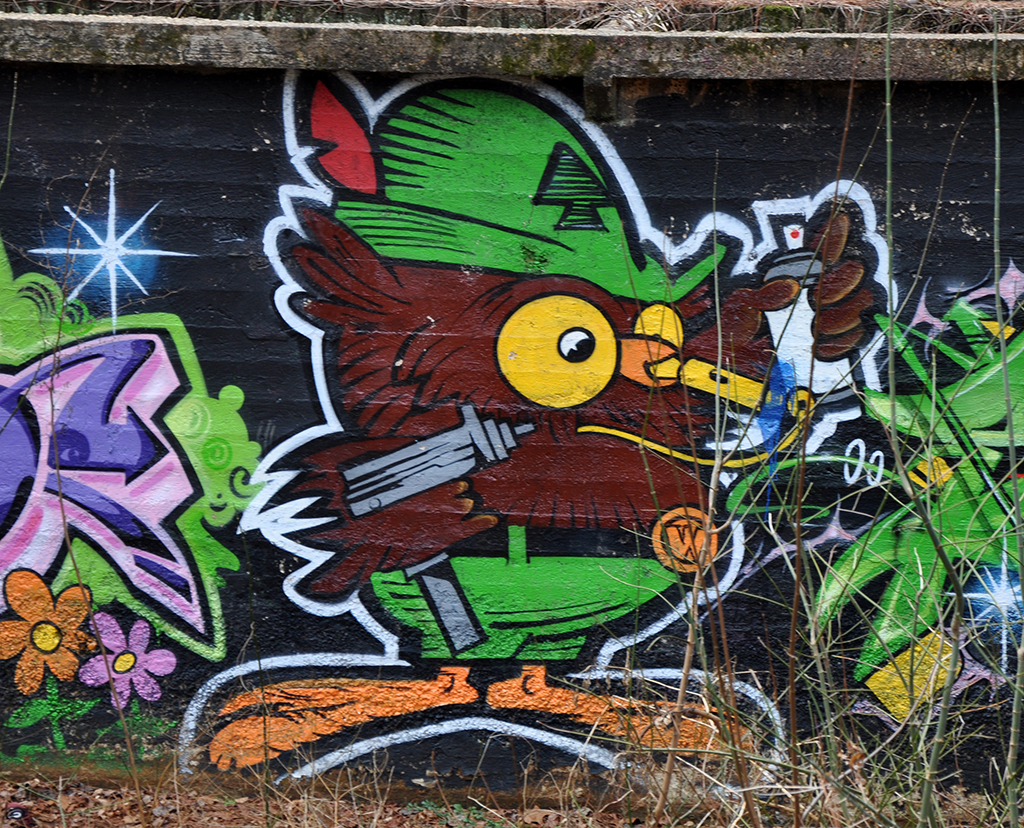
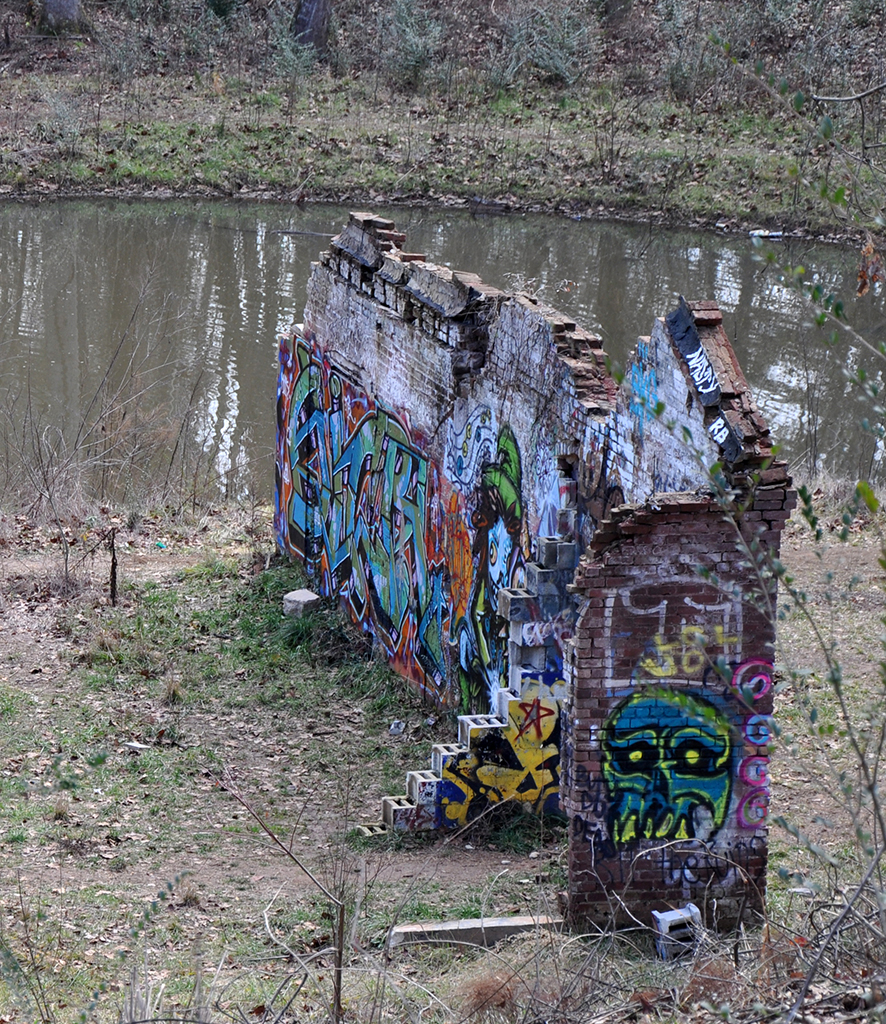
The Ruins look like a hybrid between an archaeological dig, a forest, and a hub of interesting art. It represents what’s left of Decatur’s first water treatment plant (built in the early 1900s) and has long been a playground for graffiti artists. Until the recent expansion, this area could only be reached by hiking through the overgrown Kudzu-infested woods. Those who knew of it kept the maze-like trail secret because it led to a private oasis where artistic expression went uncensored.
Prior to the construction of the water treatment facility, there was a flour mill there. It operated for about 50 years and survived the Civil War, despite the local rhetoric that all of Georgia had been burned to the ground. Ironically, the mill was a meeting place for two Corps of Union soldiers as they began the drive to eliminate legal slavery. After a fire destroyed the mill in 1898, the owners sold the property to the City of Decatur. During President Roosevelt’s New Deal initiatives, the Works Progress Administration (WPA) built a park around the treatment facility making the dams and man-made lake accessible to residents. However, by the 1940s, Decatur had outgrown the capabilities of the plant and it was abandoned for a more suitable space.  

For many years after that the site was left abandoned and unmaintained. Residents considered it a nuisance because the dams that were left behind caused flooding. In the mid-1960s a retired judge got fed up with the situation and took it upon himself to blow up the dams and drain the lake.


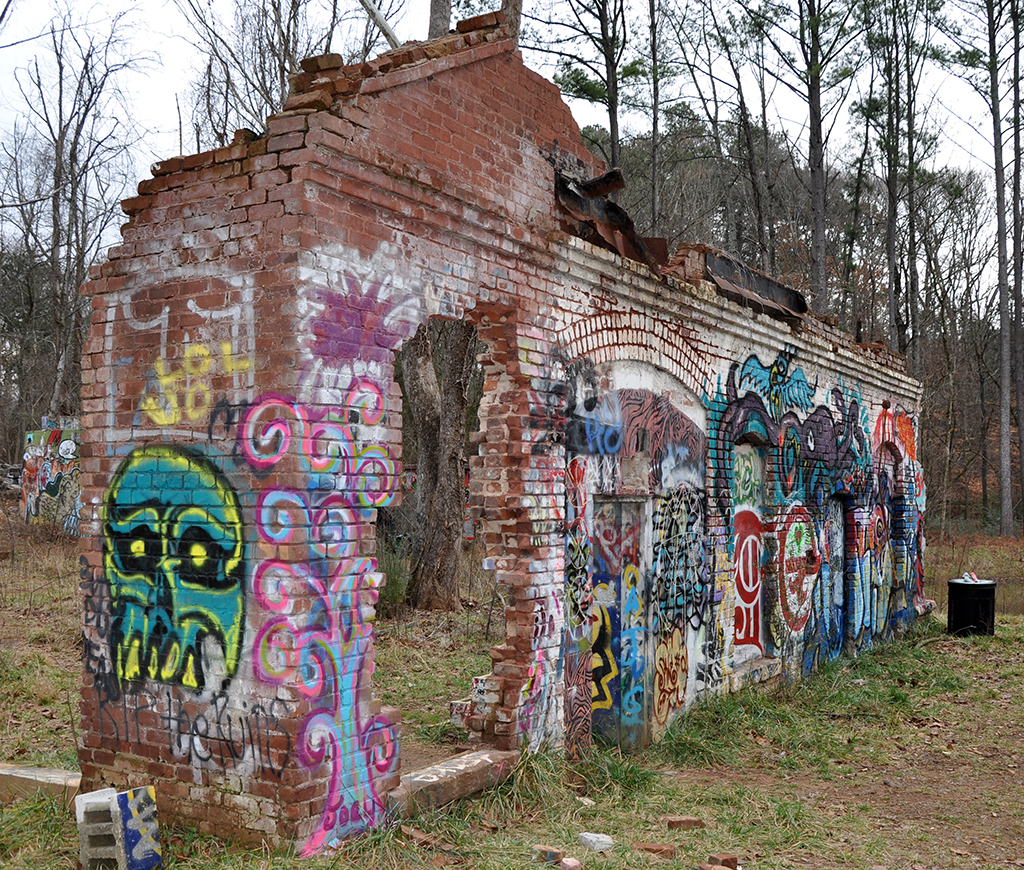
Now there’s not much left of the facility. There are some brick foundations, part of a water tower, and remains of walls, as well as an informational plaque diagramming what once existed. One particularly compelling brick wall stands alone. It includes a doorway and window that make a great spot for portraits.  Nearby is the beautiful walkway built by the PATH Foundation. Graffiti in this area has been legal since walkway expansion and is encouraged. The paintings and writings on the remaining brick structures change frequently resulting in a palimpsest of colors, themes, and words. All of which tangle together with the untamed greenery to create an urban jungle gym of sorts.

Debby Yoder is a Contributor to Social Shutter as well as a student at Georgia State University majoring in Sociology. She can be contacted at debby.yoder@gmail.com. Hubert Yoder is Debby’s father and retired after working in information systems at McDonnell Douglas, EDS, and IBM. Photography is now his work and hobby. He can be contacted at hyoder@gmail.com.

Originally posted on February 9, 2013 at: http://socialshutter.blogspot.com/2013/02/the-ruins.html
Atlanta’s Warped Civil Right Legacy: The Sad Story of Paschal’s Restaurant

Saturday, January 19, 2013

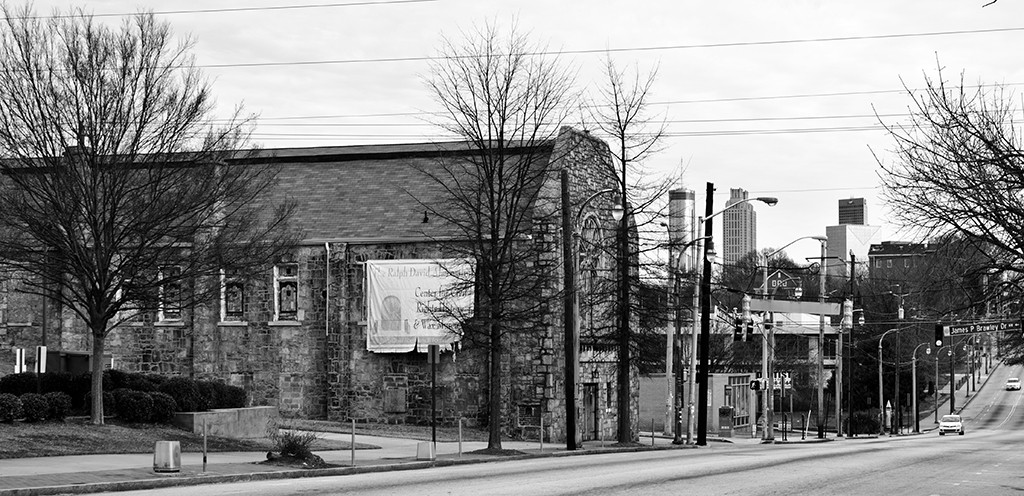
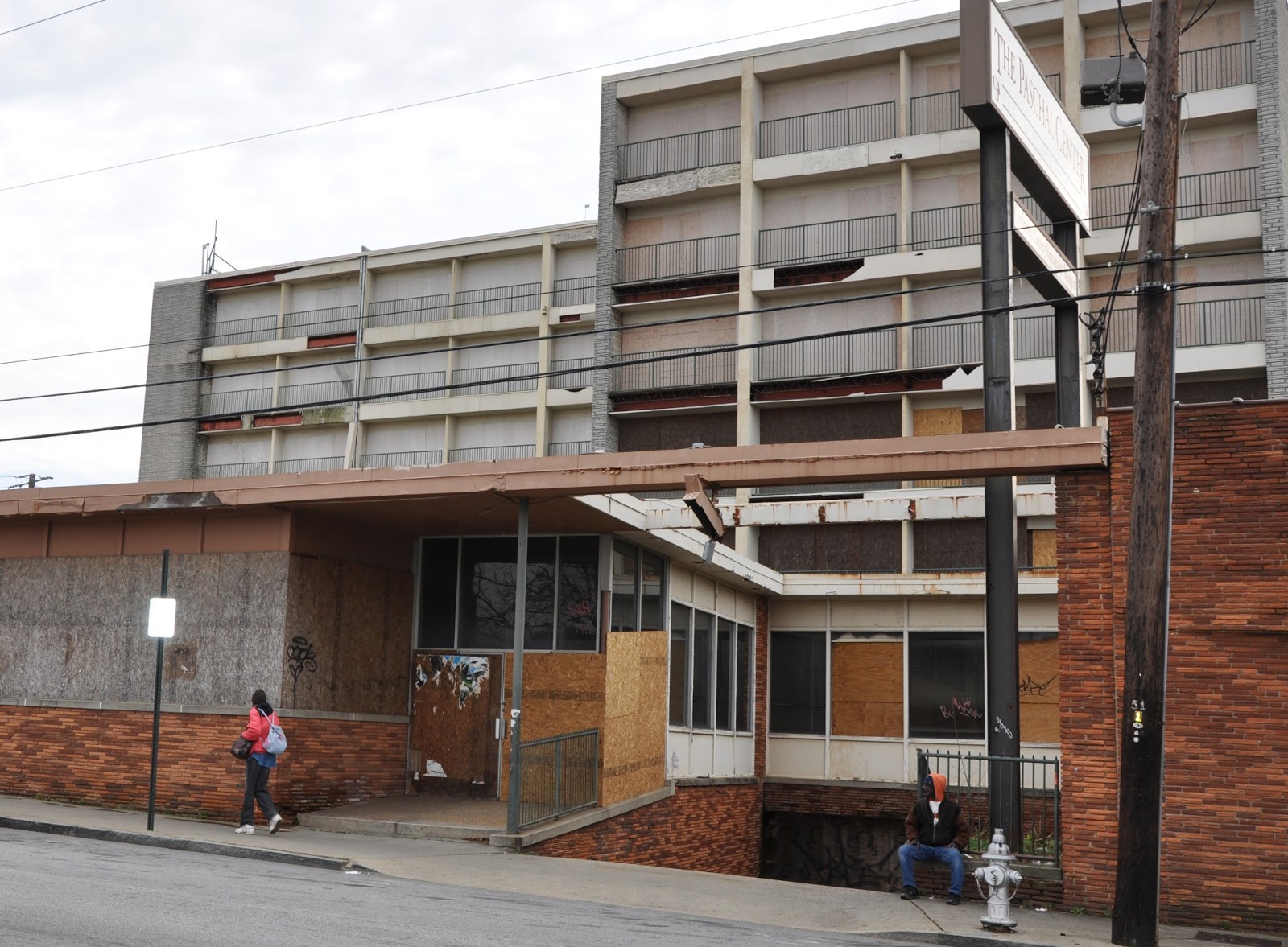
Posted by Debby and Hubert Yoder, ATLANTA GA — The historic Paschal’s Restaurant and Motor Hotel, where much of the civil rights movement was launched, stands in ruins. Across the street shines a brand new Wal-Mart. Parts of the neighborhood are undergoing renovation with new condos and strip malls, while Paschal’s sits abandoned and decaying. The irony is so blatant that the Washington Post did an article about the condition of this civil rights legacy last summer.

Paschal’s Restaurant was opened by two brothers in 1947. They grew up in the post-slavery period of sharecropping in Thomson, GA, picking cotton from dawn to dusk yet barely scraping by. Their aspirations for a better life led them to Atlanta where they opened a small chicken shack near Clark College (Now Clark Atlanta University). The popularity of the shack enabled them to move into a full-service restaurant across the street and later the siblings added a hotel and lounge. Their business was thriving. The lounge attracted top-notch jazz musicians and students from the local Historically Black colleges visited the restaurant daily and introduced the place to visiting family and friends. In these segregated times, Blacks had few options for upscale dining and entertainment and Paschal’s delighted in providing the best of both.

When the modern day civil rights movement began to take shape, Paschal’s was at the forefront. The student groups met for meals and strategizing and a young Martin Luther King Jr. approached the brothers about a regular spot for his team to convene. They embraced the opportunity and set aside a meeting room where the team planned the 1963 March on Washington and the subsequent marches on Selma, Alabama. The passage of the 1964 Civil Rights Act was celebrated at Paschal’s and the Poor People’s Campaign was organized there in the months before King’s murder. The movement continued without King and Paschal’s remained the place for crafting the future. Andrew Young, John Lewis, Jesse Jackson, Rev. Joseph Lowery, and Maynard Jackson all met regularly to plan demonstrations, political campaigns and celebrate each step forward. As Blacks gained political power, Paschal’s became known as “Little City Hall.”

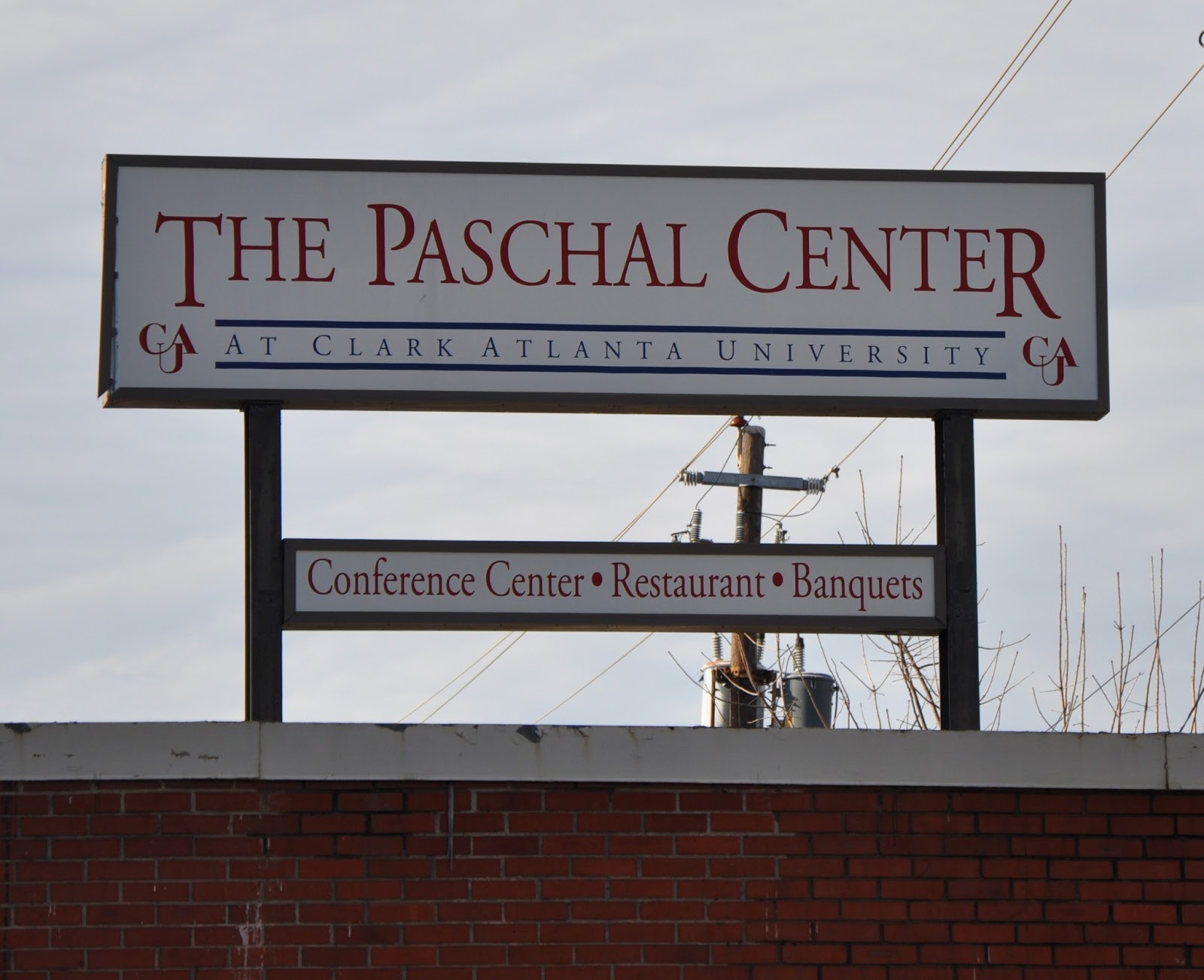
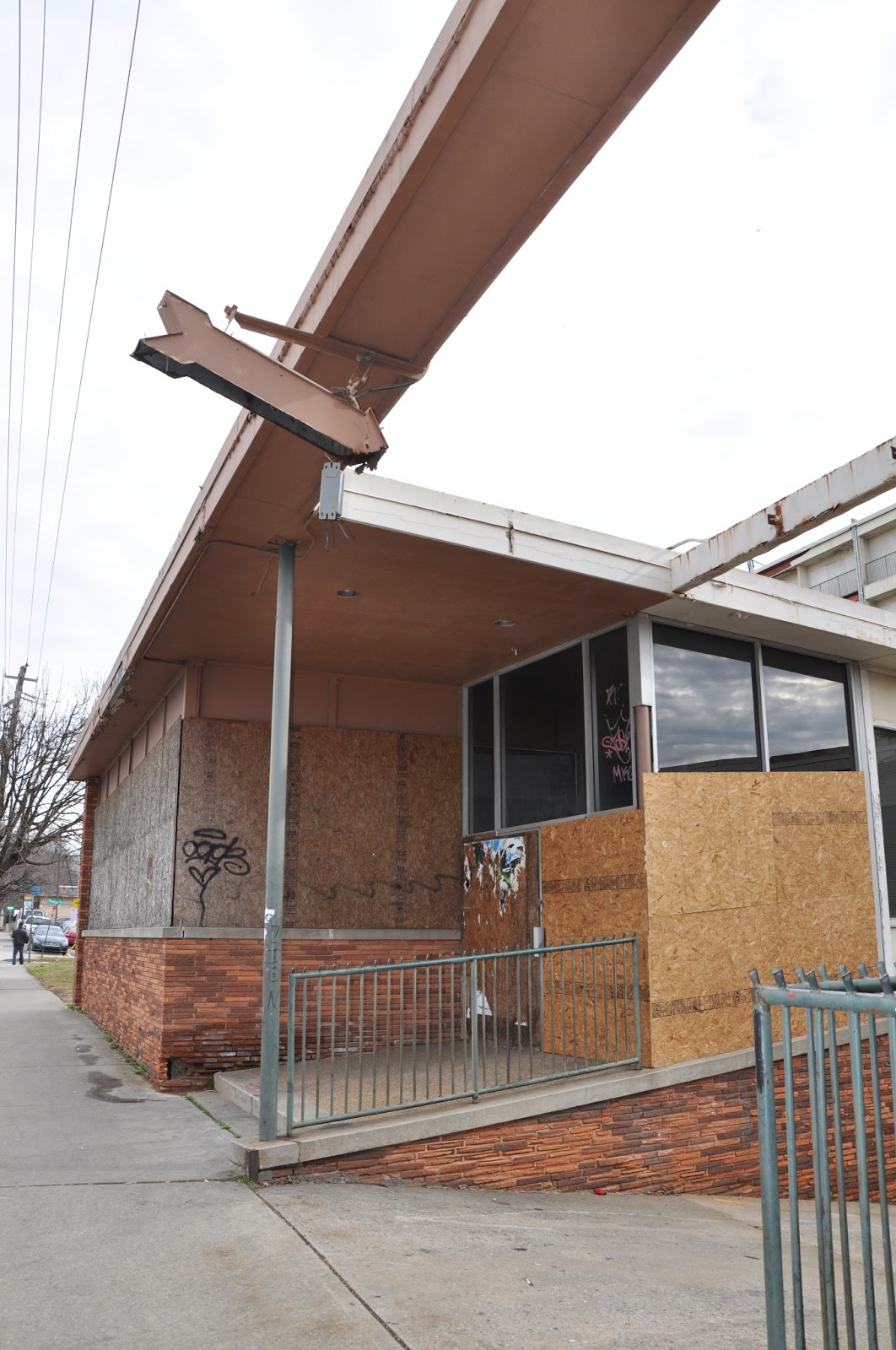
The restaurant itself  has relocated to the gentrifying Castleberry Hill neighborhood, while the original building became the Paschal Center and part of Clark Atlanta University (CAU). CAU operated the restaurant as a dining hall and the hotel as a dorm but shut down both due to the costs associated with maintaining the aging buildings. So now the building sit boarded up and left to rot.  The symbolism has taken its toll on the surrounding neighborhood. Entire streets of homes, businesses and churches are boarded and unoccupied; many have been damaged by fire. Homeless and unemployed people wander the streets and squat in the abandoned buildings. There are reports of rampant drug and alcohol abuse. In the midst of this, students attend the nearby John F. Kennedy elementary school, which, by comparison, has been reasonably well maintained, perhaps because of its link to a white man. The message is subtle, but clear.

Contrast this with the Lorraine Hotel in Memphis, Tennessee where the site of King’s murder has become the National Civil Rights Museum. The museum opened in 1991 and has welcomed more than three million visitors since. It provides a tribute to the past as well as educational opportunities for the future. Started by a small group of preservation-conscious individuals, it has become part of the National Parks system and continues to expand. Like the King Center in Atlanta, also part of the National Park system, it provides a living, breathing link to a not-so-distant and very important past.

If the city of Atlanta can consider sinking money into a new football stadium to draw tourists to the area, shouldn’t it also invest in restoring Paschal’s and its surrounding neighborhood, which may have even greater tourist potential? Tax revenues are collected from the hotel and motel industry to fund development, historic preservation and create additional destination appeal. Paschal’s is ready for such an investment. Coretta Scott King was once quoted as saying, “Paschal’s is as important a historical site for the American Civil Rights Movement as Boston’s Faneuil Hall is to the American Revolution.” We need to act before we lose our history to strip malls and Wal-Marts.

Debby Yoder is a Contributor to Social Shutter as well as a student at Georgia State University majoring in Sociology. She can be contacted at debby.yoder@gmail.com. Hubert Yoder is Debby’s father and retired after working in information systems at McDonnell Douglas, EDS, and IBM. Photography is now his work and hobby. He can be contacted at hyoder@gmail.com.

Originally posted January 18, 2013 at: http://socialshutter.blogspot.com/2013/01/atlantas-warped-civil-right-legacy-sad.html

The Georgia Aquarium: Sanctuary for Sea Creatures or Playground for the Rich?

Sunday, January 6, 2013

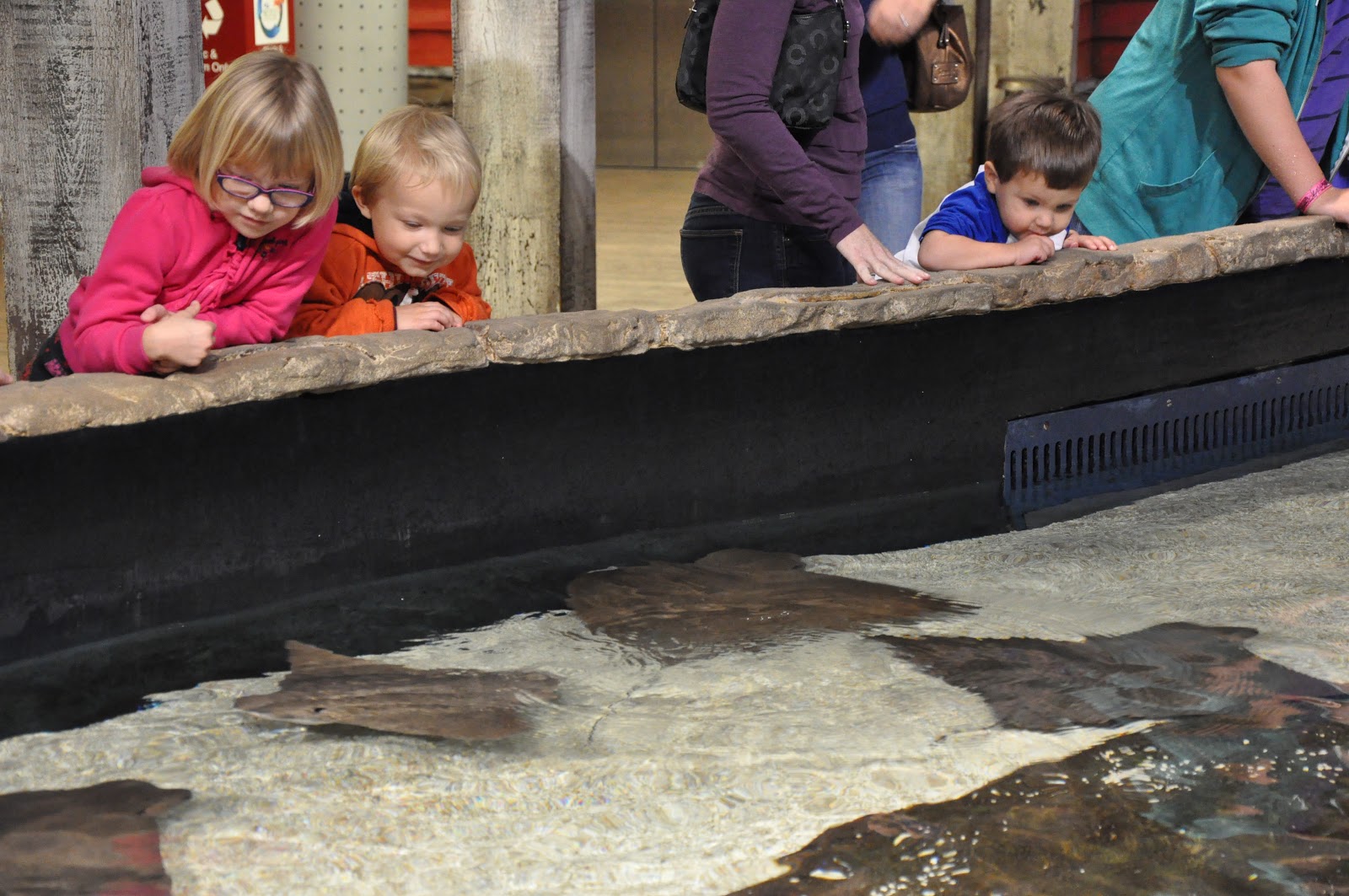
Posted by Debby and Hubert Yoder, ALTANTA, GA — For a city that conference-goers in particular love to hate, the Georgia Aquarium offers a unique sanctuary of sorts. Opened in 2005, the aquarium is the world’s largest. From the moment you walk through its doors you are transported to a magical place. The facility is truly awe-inspiring. There are creatures who live beneath the sea in places most of us will never visit with colors so vibrant and unusual they seem to have escaped from Avatar.

Recently, however, the aquarium has become embroiled in controversy for its attempt to purchase 18 Beluga whales that were captured in the wild off the coast of Russia. This practice was banned 40 years ago in a Save the Whales campaign as populations dwindled from over-fishing. Aquarium officials have sought special permission to make this purchase due to the need to expand the genetic line for whales in captivity. Attempts at breeding and sustaining the Beluga population have not progressed as hoped and critics say it’s because Beluga whales are especially sensitive and unhappy in captivity.

The aquarium’s Beluga whale habitat has recently undergone renovation to allow more access to the whales during private diving adventures. This may be in anticipation of an increased population or a move to align them with the performing dolphins. Whatever the intent, it seems the aquarium has shifted its focus. When Home Depot founder Bernie Marcus announced his plans to build this facility, he expressed a desire to include conservation efforts as a primary part of the aquarium. Now it faces criticism for the number of late night, private events it hosts, as well as the attempts to capture animals in the wild.

Undoubtedly, the aquarium is an amazing place. And seeing all the magnificent creatures is incredible. Clearly they are all well taken care of. But does knowing that they could have lived their lives in the wild and that they are increasingly subjected to private events for Atlanta’s wealthy tarnish the experience?

Debby Yoder is a Contributor to Social Shutter as well as a student at Georgia State University majoring in Sociology. She can be contacted at debby.yoder@gmail.com. Hubert Yoder is Debby’s father and retired after working in information systems at McDonnell Douglas, EDS, and IBM. Photography is now his work and hobby. He can be contacted at hyoder@gmail.com.

Originally posted January 6, 2013 at: http://socialshutter.blogspot.com/2013/01/the-georgia-aquarium-sanctuary-for-sea.html
“Stay the Nite, or Stay Forever…Free Wi-Fi”

Saturday, October 13, 2012

Posted by Debby Yoder, DOUGLASVILLE, GA — For years I have driven by the extended stay hotels in my community and pondered about the people who occupy the rooms. There is little industry or tourist appeal here, so the large number of hotels has always puzzled me. I assumed the rooms were typically vacant, and the occasional guests were people visiting family, friends, or those whose employment required they work away from home for a lengthy period. But then I found out that the individuals and families who live in these hotels call them home — a trend on the rise since the housing bust. I always wondered why there were storage facilities in such close proximity. I also wondered whether one could receive mail there, or use the location’s address to register children in school, little things like that which most of us take for granted.

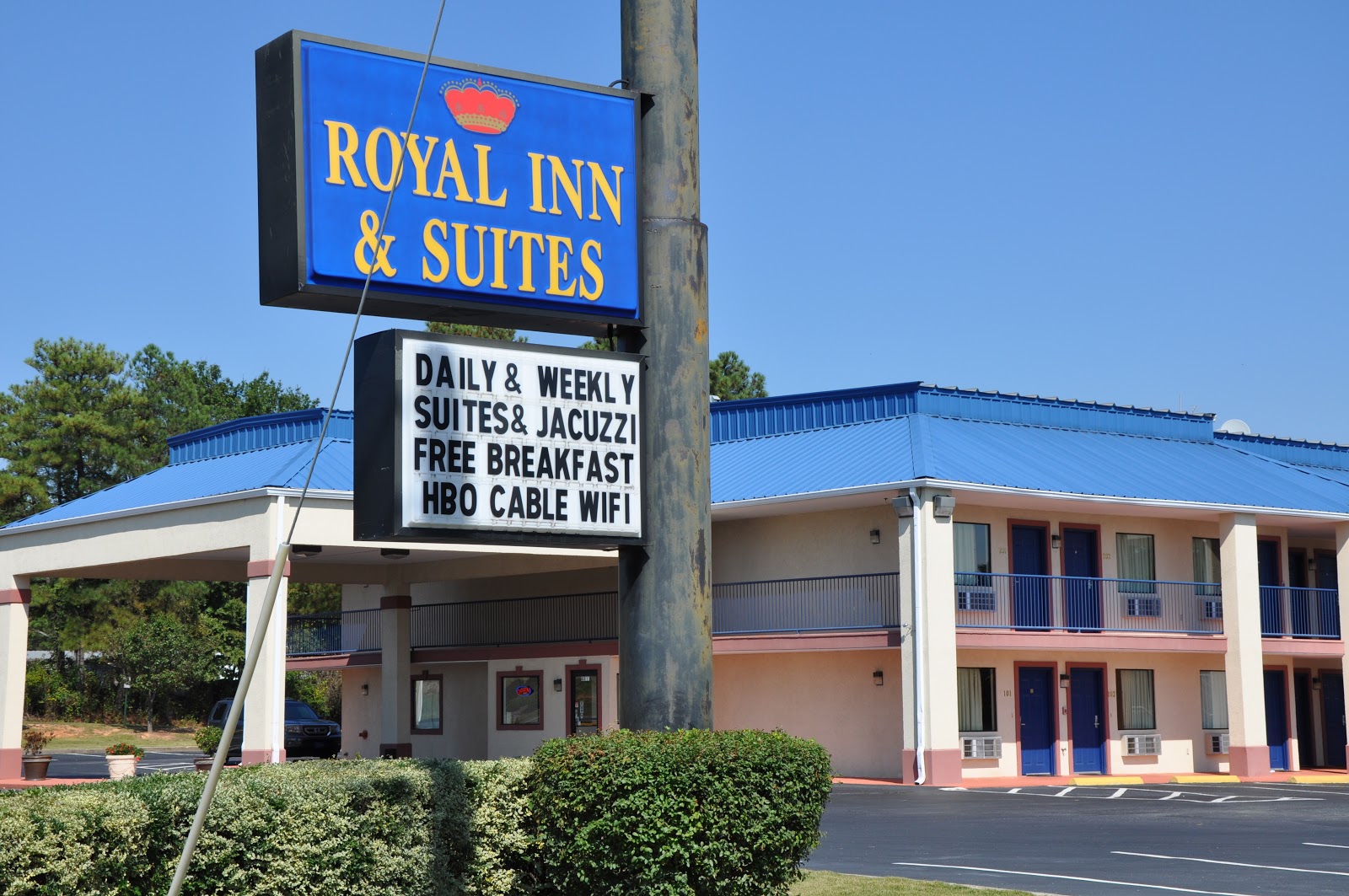
The answers turned out to be yes, and the hotel industry — at least in the greater Atlanta Metro Region —  loves the extended stay concept. These hotels have unusually high occupancy and tend to raise rates more often than traditional hotels. But this doesn’t mean it’s like staying at the Ritz Carlton (watch out for the bedbugs for one thing). You can get a weekly rate of $154, no deposit required, no questions asked…well, as long as you hand over the cash. This attracts all sorts of people — families who can only find part-time employment; day laborers, immigrants, parolees, and anybody else who just can’t afford to pay a security deposit on a rental apartment.

Hotel managers look the other way when it comes to how many people are staying in a room, as well as a number of other things a landlord might want to know. You could say, “well, at least these residents are not out on the street.” True, at least for a week. But the irony is that the weekly rate, on average, translates to just over $600 (plus taxes) per month. However, there are many apartment complexes around the region where you can rent something for less. The problem is the background and credit checks, the number of people, and the ability to come up with two month’s rent for the deposit. While there might be some rather unsavory characters putting down temporary roots at these hotels, there are also many law-abiding citizens who simply have no other choice. So the other irony is because they are paying a weekly rate that may increase at anytime, it can be very difficult to save up for that elusive security deposit.

Now when I pass these extended stay hotels, I know that the occupants are not simply visiting family for a few days or are out-of-state people with temporary employment here.  It also makes me wonder why the Atlanta region is thought to have a ‘soft’ rental market when so many people cannot afford housing, and it makes me wonder why we don’t have more affordable housing programs for individuals and families in these situations.

Debby Yoder is a contributor to Social Shutter as well as a student at Georgia State University. She can be reached at debby.yoder@gmail.com.

Originally posted October 13, 2012 at: http://socialshutter.blogspot.com/2012/10/stay-nite-or-stay-foreverfree-wi-fi.html

Welcome to DragonCon!

Saturday, September 22, 2012

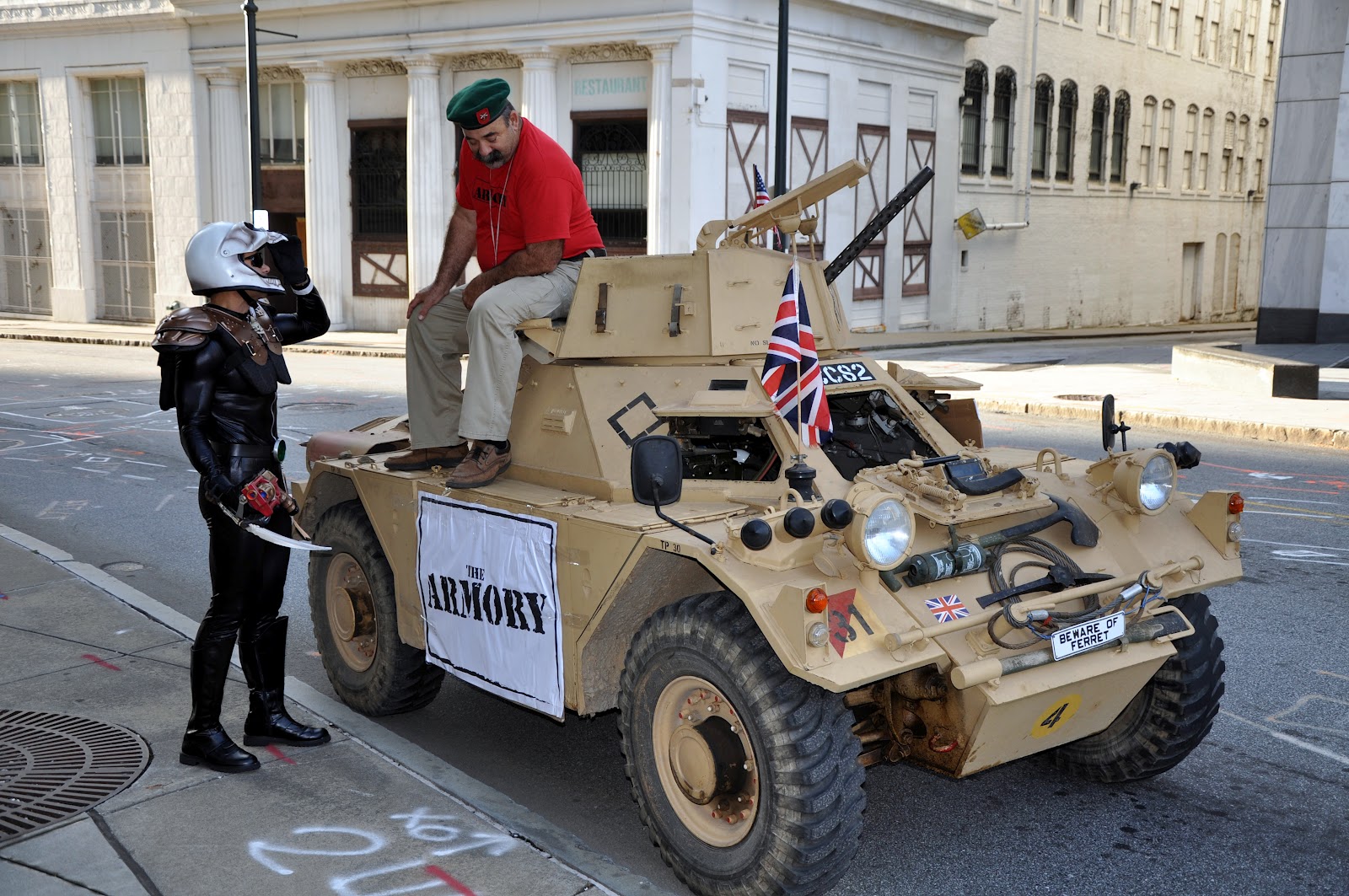
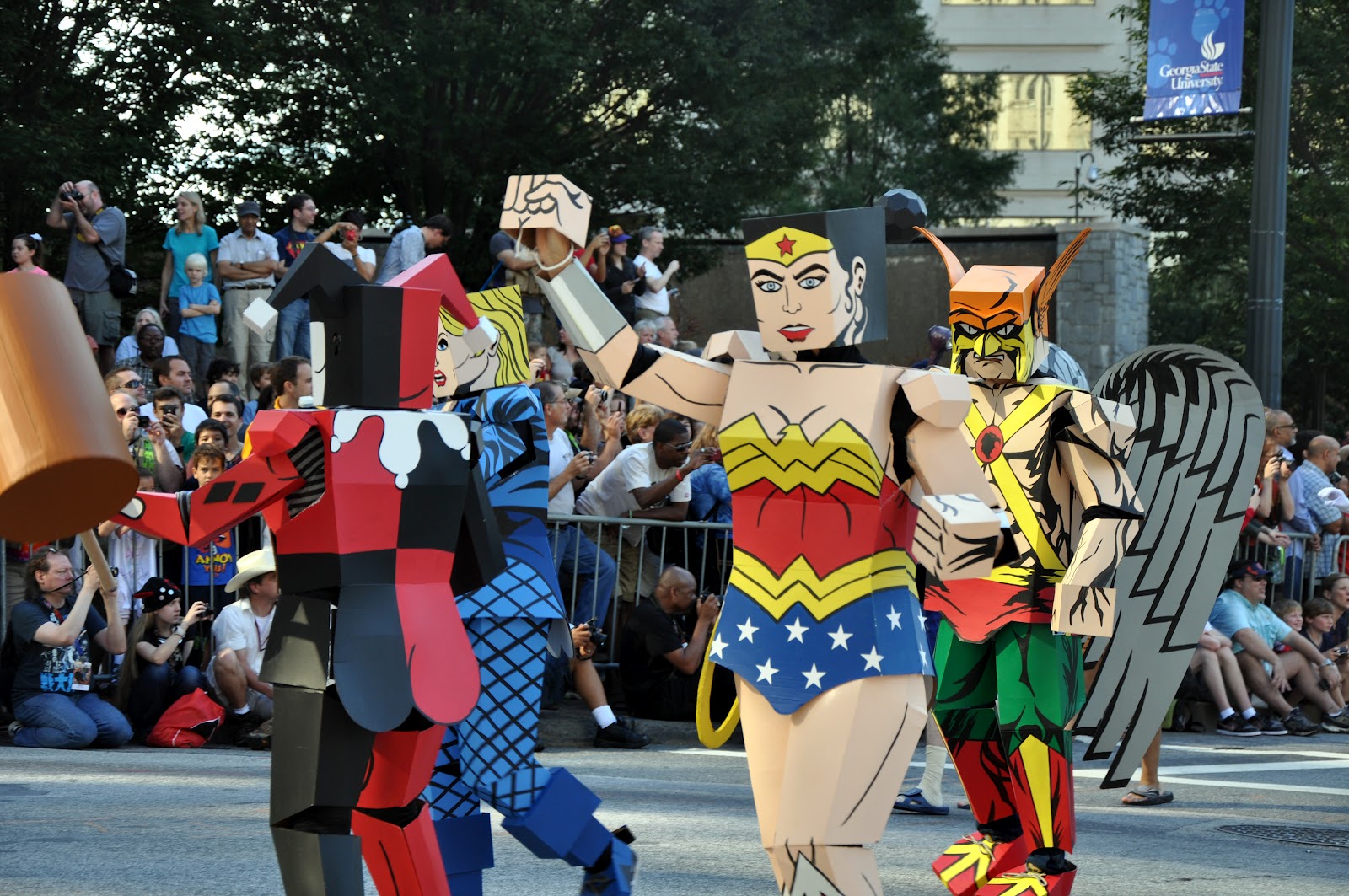
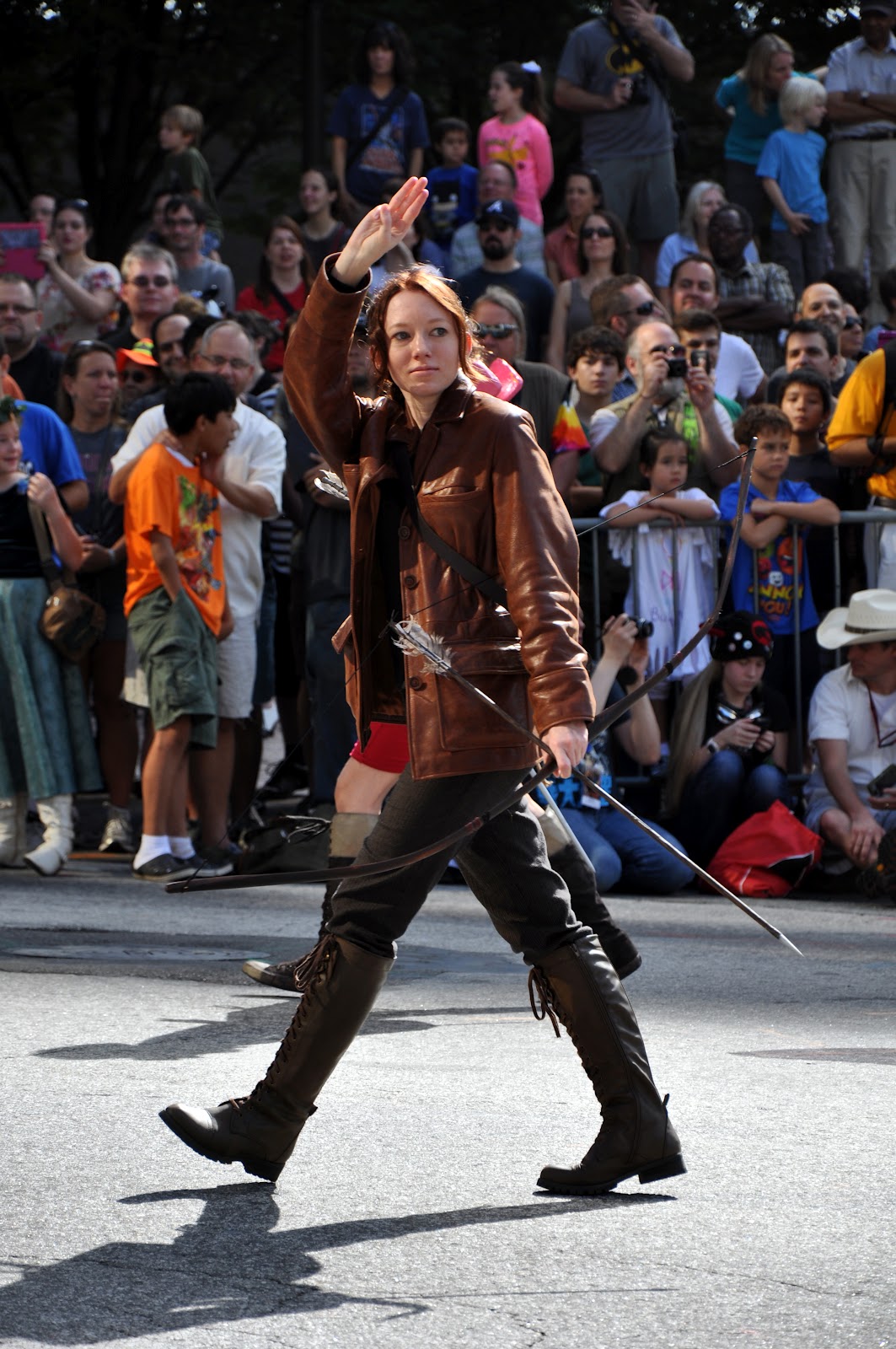
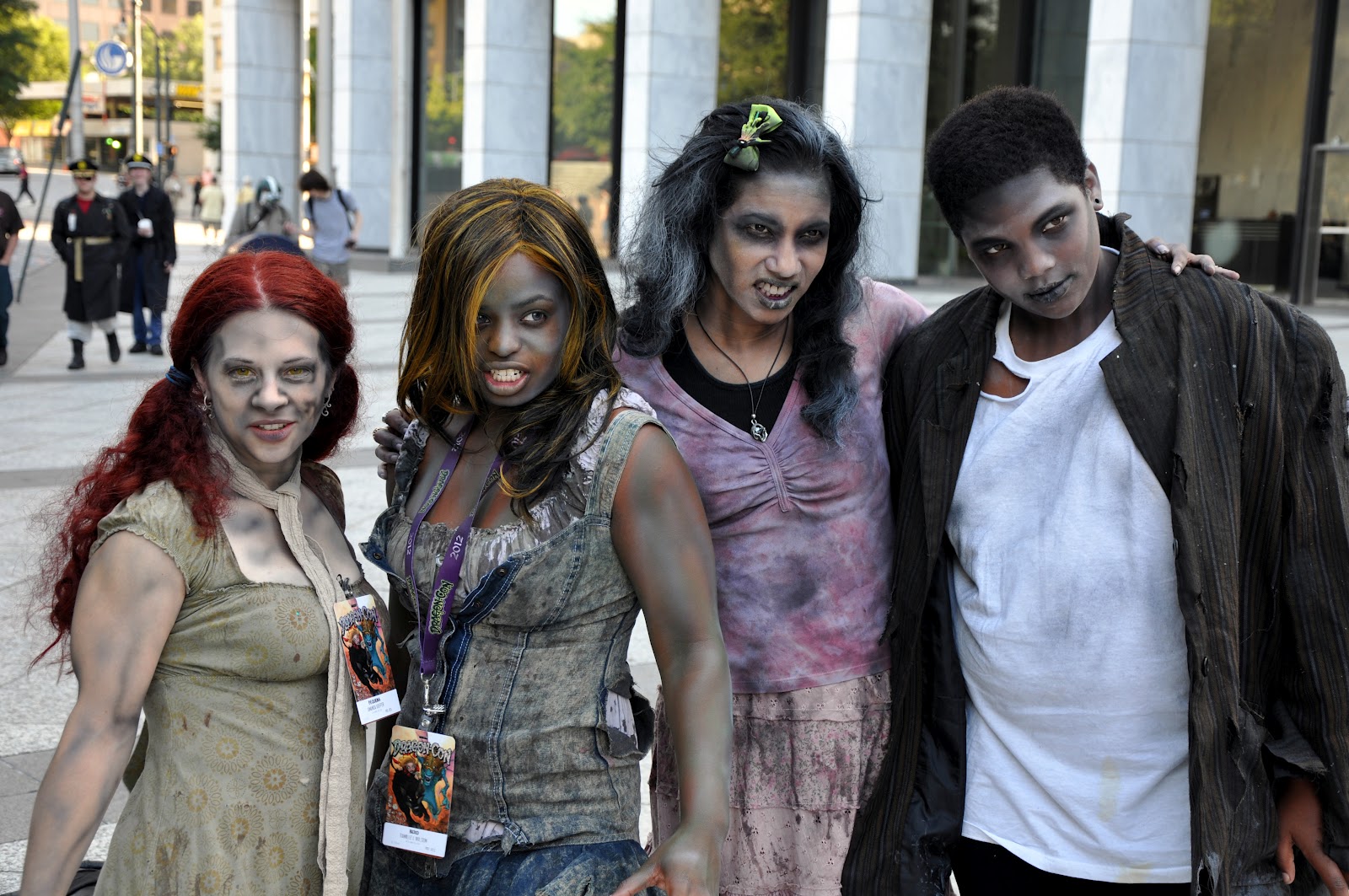
Posted by Debby Yoder, ATLANTA, GA — Atlanta’s Labor Day weekends are filled with interesting things to do around the city. But perhaps the most popular and famous event is DragonCon. Founded in 1987, DragonCon is now the largest parade and convention dedicated to all things science fiction around (DragonCon officials will tell you it’s the largest in the universe). The Con is well-known for the extreme costumes and occasionally outlandish behavior of some of the participants. All descriptions are understated compared to the sheer joy of being at the parade and convention. This year some 52,000 people attended. Over the years, Con has expanded to include comics, gaming, film and pretty much anything found in pop culture. Zombies continue to grow in popularity and this year’s parade included a Zombie Boy Scout troop and an oversized float from Netherworld Haunted House.  Katniss Everdeen from the Hunger Games series made an appearance, alongside classics like the Batmobile and a large contingent of Star Wars characters.

Lesser known about DragonCon is the annual charity auction and blood drive. For example, last year’s auction raised about $40,000 for the National Inclusion Project to assist children with disabilities, and collected 3,500 units of blood. Stay away vampires. By the way, you can “like” DragonCon on Facebook and keep up with all of its other events and activities. https://www.facebook.com/pages/DragonCon/58381388805

Debby Yoder is a contributor to Social Shutter and a student at Georgia State University She can be contacted at debby.yoder@gmail.com.

Originally posted on September 22, 2012 at: http://socialshutter.blogspot.com/2012/09/welcome-to-dragoncon.html
Railroad Atlanta?

Saturday, August 11, 2012

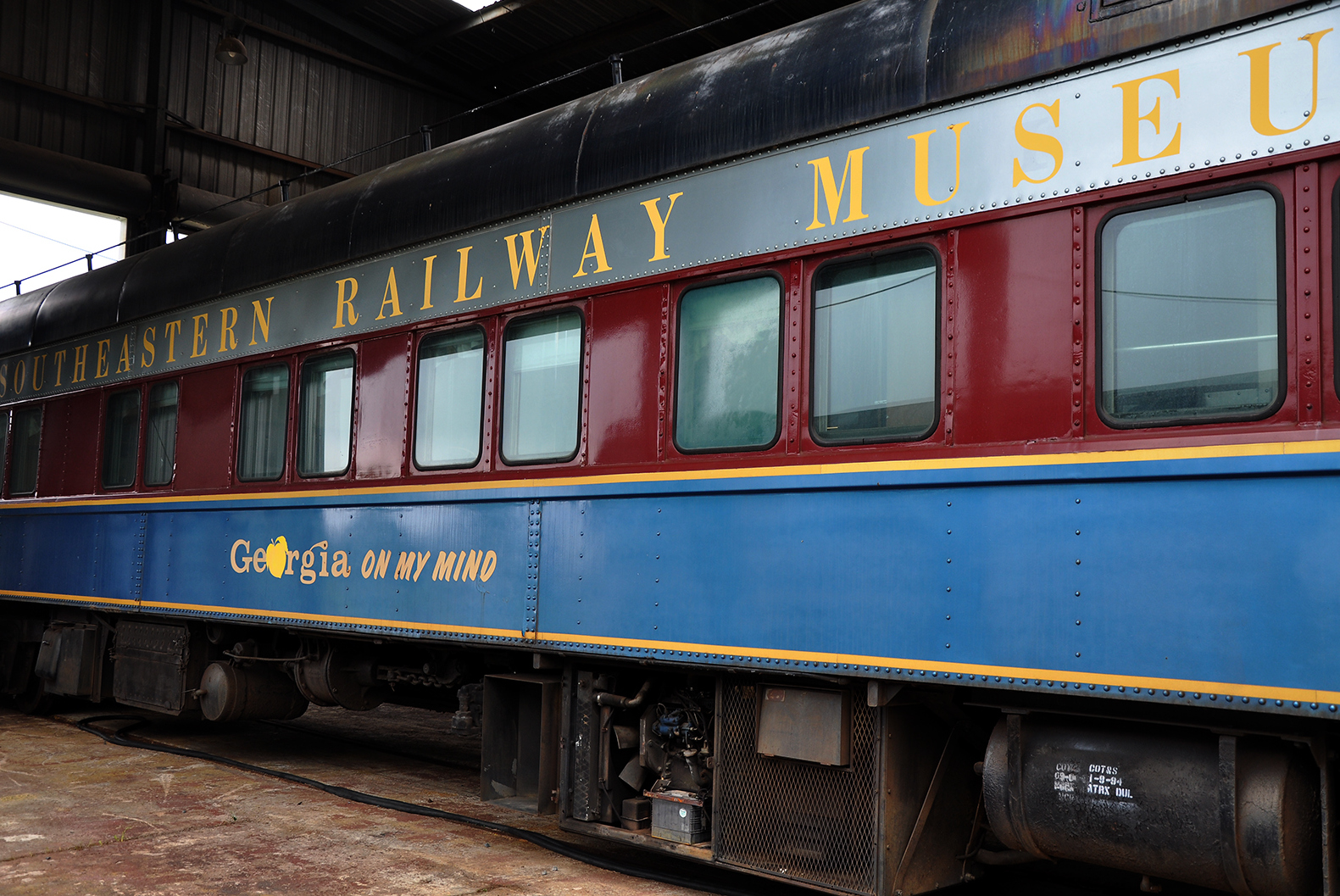
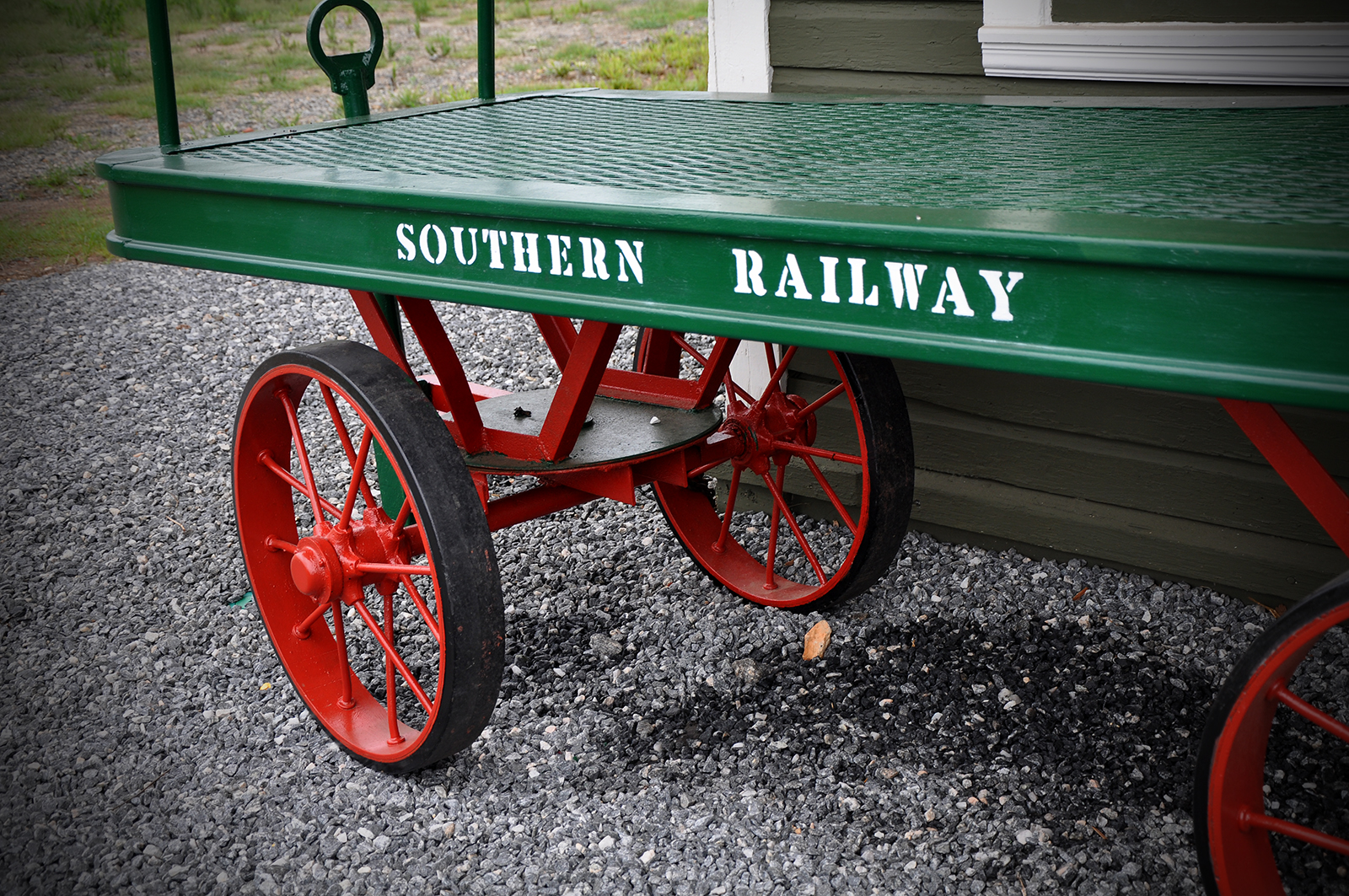
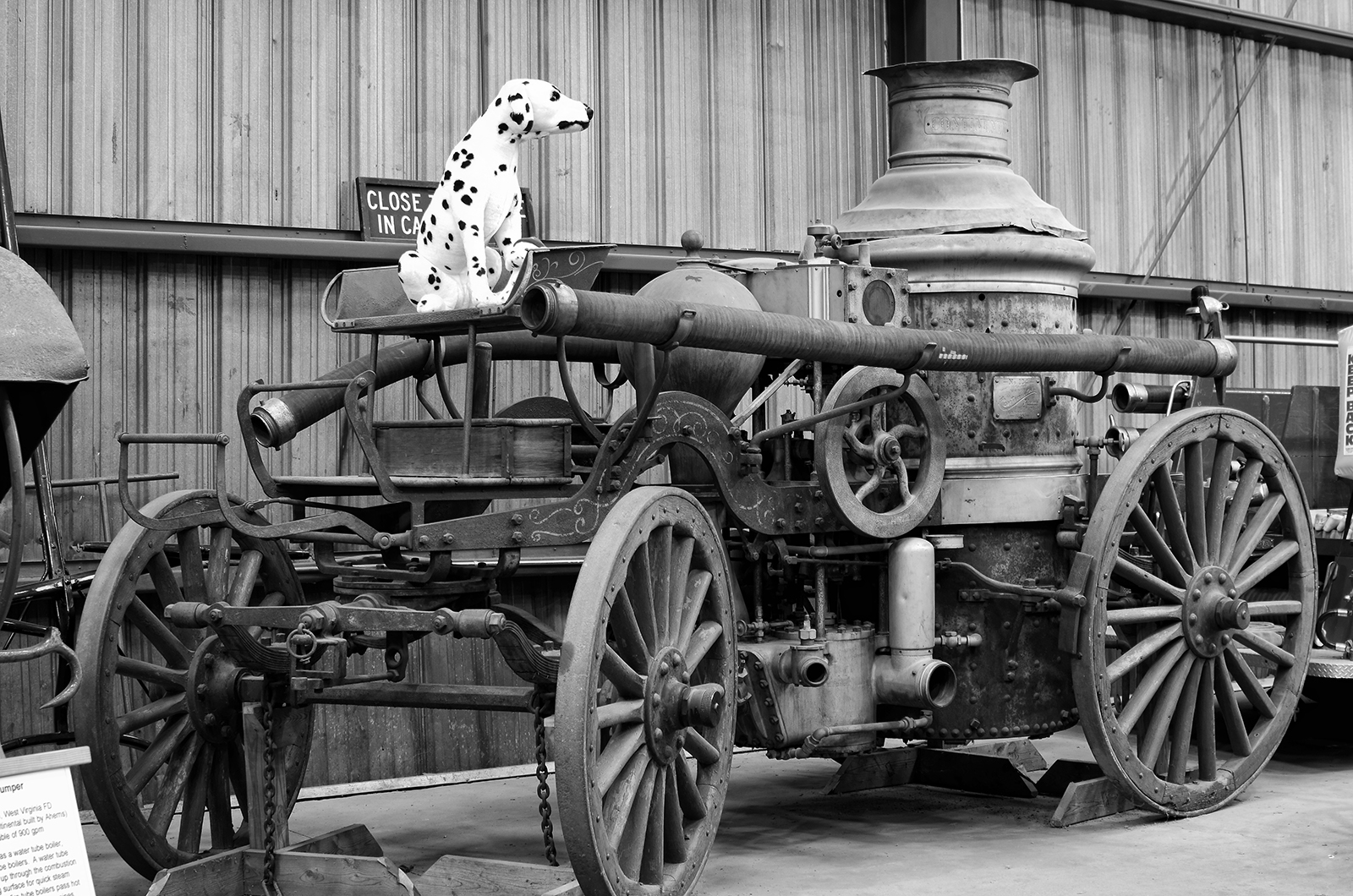
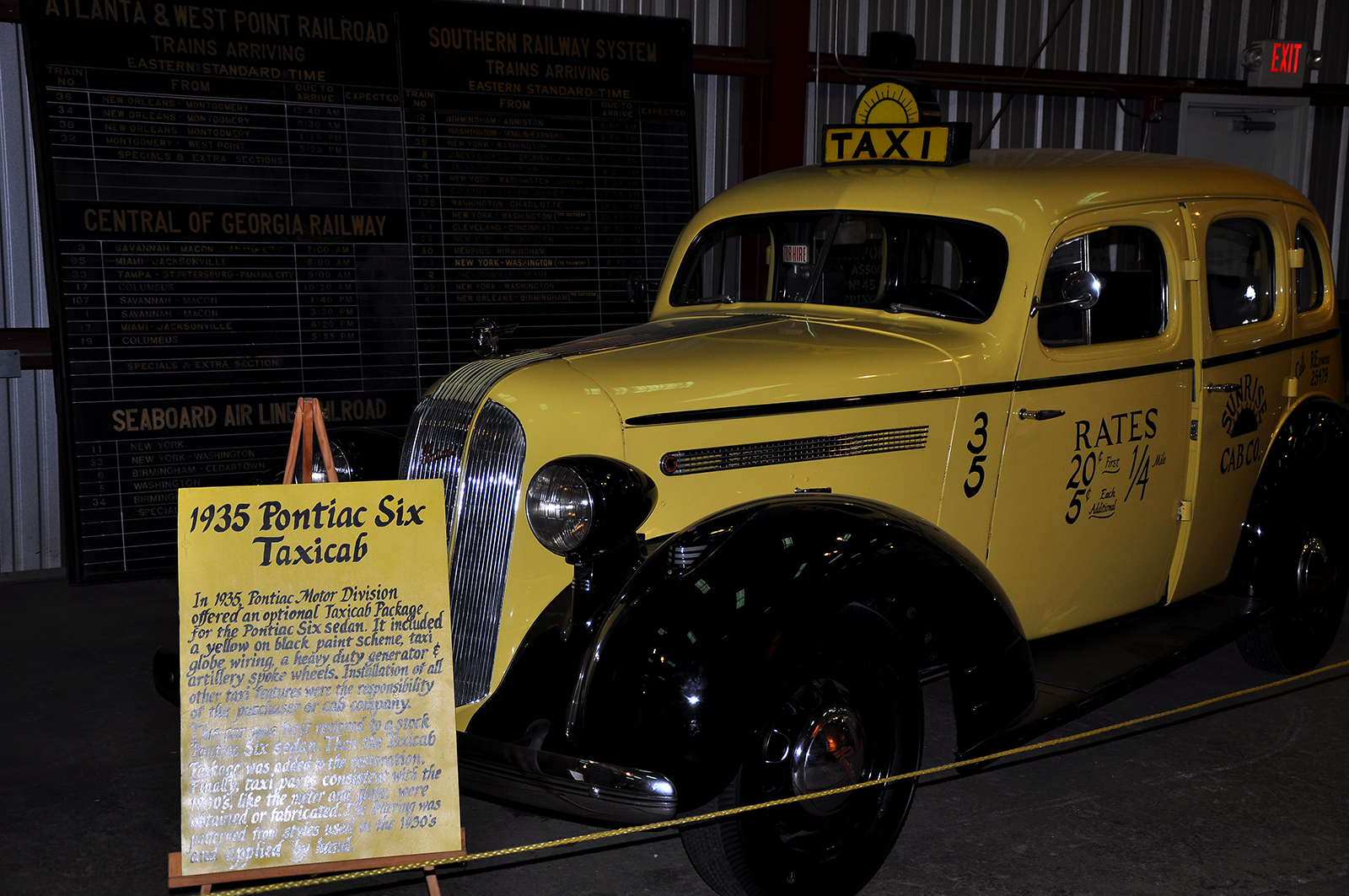
Posted by Hubert and Debby Yoder, DULUTH, GA — Atlanta’s current struggles with transportation problems are ironic given the city started as a railway hub. In the early 1800s, when goods and people moved about by railroad, Atlanta was an essential crossroad between major routes north and west from Georgia’s southern ports. Some say Atlanta’s very name is a tribute to the railway line that brought the earliest residents to the area. The legacy of this time is all around us. Pieces of the railway infrastructure have been turned into recreation facilities such as the Silver Comet Trail and the Atlanta Beltline. The Southeastern Railway Museum in Duluth was created to honor and preserve another part of this history. This working museum exhibits and restores machinery. as well as operates a train that takes visitors on a tour of the grounds. In addition to a variety of train engines and cars from across the years, the museum houses buses, taxis, fire trucks and a variety of support equipment.

Interestingly, this era is so far removed from Georgia’s now almost half-century-old automobile-dependent, sprawled out and congestion-ridden highway system. In fact the Atlanta area has a shamelessly sparse train-based public transportation infrastructure. What’s quite ironic is that the recent push for T-SPLOST, an Atlanta regionalreferendum that would have increased the sales tax by one percent in exchange for various transportation improvement projects was soundly defeated last month. Part of the issue may have been the implied focus on highways rather than making the region more accessible to those without cars, or those who have become tired of driving on the region’s car-stuffed highways through rail transit.

Hubert Yoder is currently retired after working in information systems at McDonnell Douglas, EDS, and IBM. Photography is now his work and hobby. He can be reached at hyoder@gmail.com. Debby is his daughter and a contributor to Social Shutter, as well as a student at Georgia State University. She can be reached at debby.yoder@gmail.com.

Originally published August 11, 2012 at: http://socialshutter.blogspot.com/2012/08/railroad-atlanta.html

1970: The Year Women Finally Got the Right to Vote

Sunday, July 15, 2012

Editor’s note: I was in college in the 1980s and by then I thought discrimination and prejudice against women were things of the past (well at least for white women anyway). I wasn’t aware of it happening to me often. But during the times throughout my life when I knew it was happening I felt deep shock, anger, and a visceral hurt, although I never expressed it. Instead I’d say to myself: “stay calm, confident, poised, proud, don’t get defensive, and find a way around this”. Our Contributor, Debby Yoder,  gave me another shock this week but this time my reaction was: “My God, I had no idea!”  Her fascinating and informative post on women’s suffrage in Georgia illustrates the very long road to voting rights for women in this state, a battle that didn’t end until 1970.

Posted by Debby Yoder, ATHENS, GA — Many people think women received the right to vote in 1920, with the passage of the 19th Amendment to the United States Constitution. While it’s well known that racial barriers to voting persisted, little known is that fact that it wasn’t until 1970 that Georgia gave women the right to vote. Think about it: 1970, the year of Apollo 13, mounting opposition to the Vietnam War, and the Kent State shootings — not the 50 years earlier like you read in history books. Basically the Georgia legislature voted against the 19th Amendment on a number of occassions. It was finally ratified in 1970, not too many years before Georgia’s own Jimmy Carter became President.

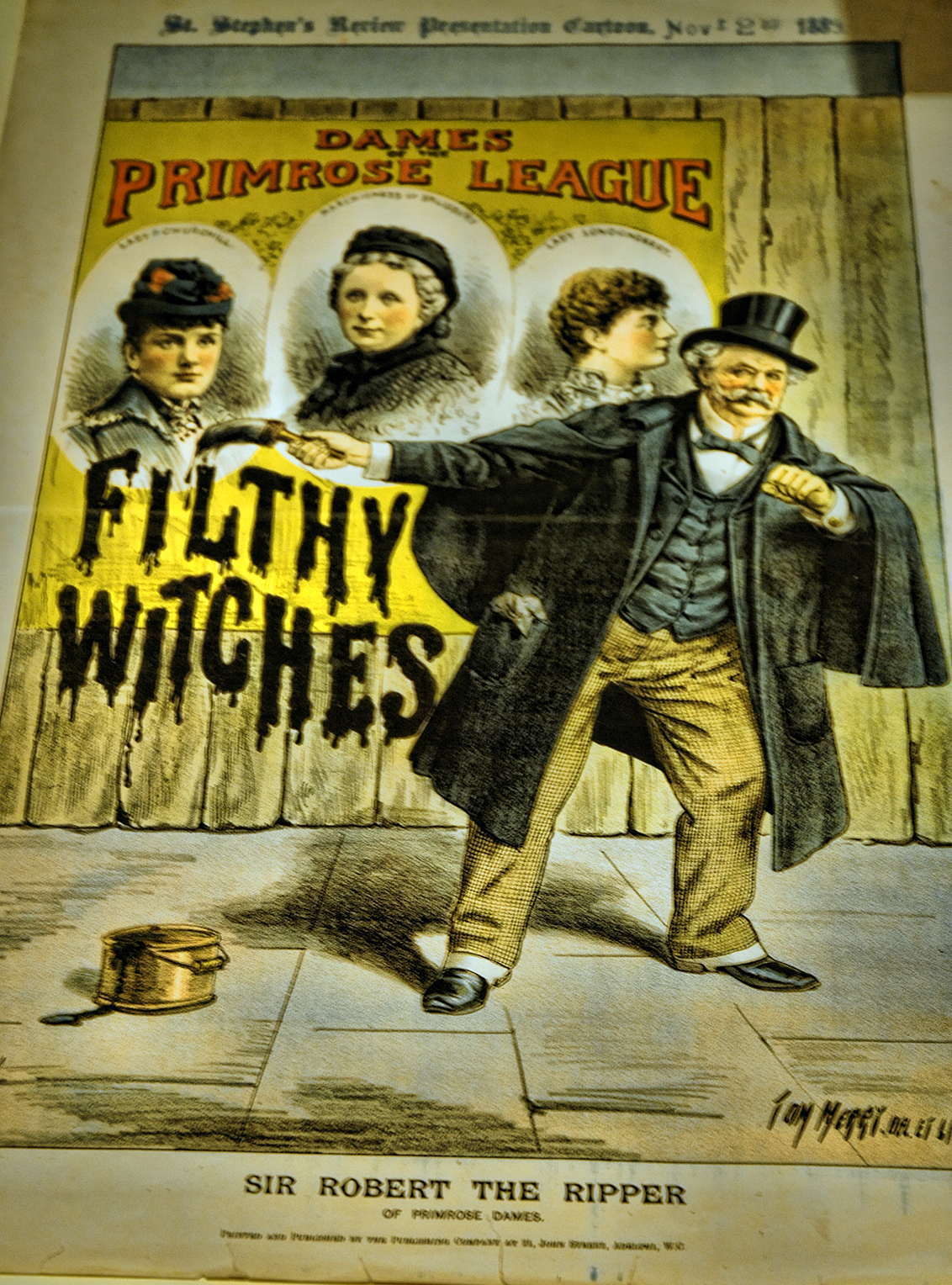
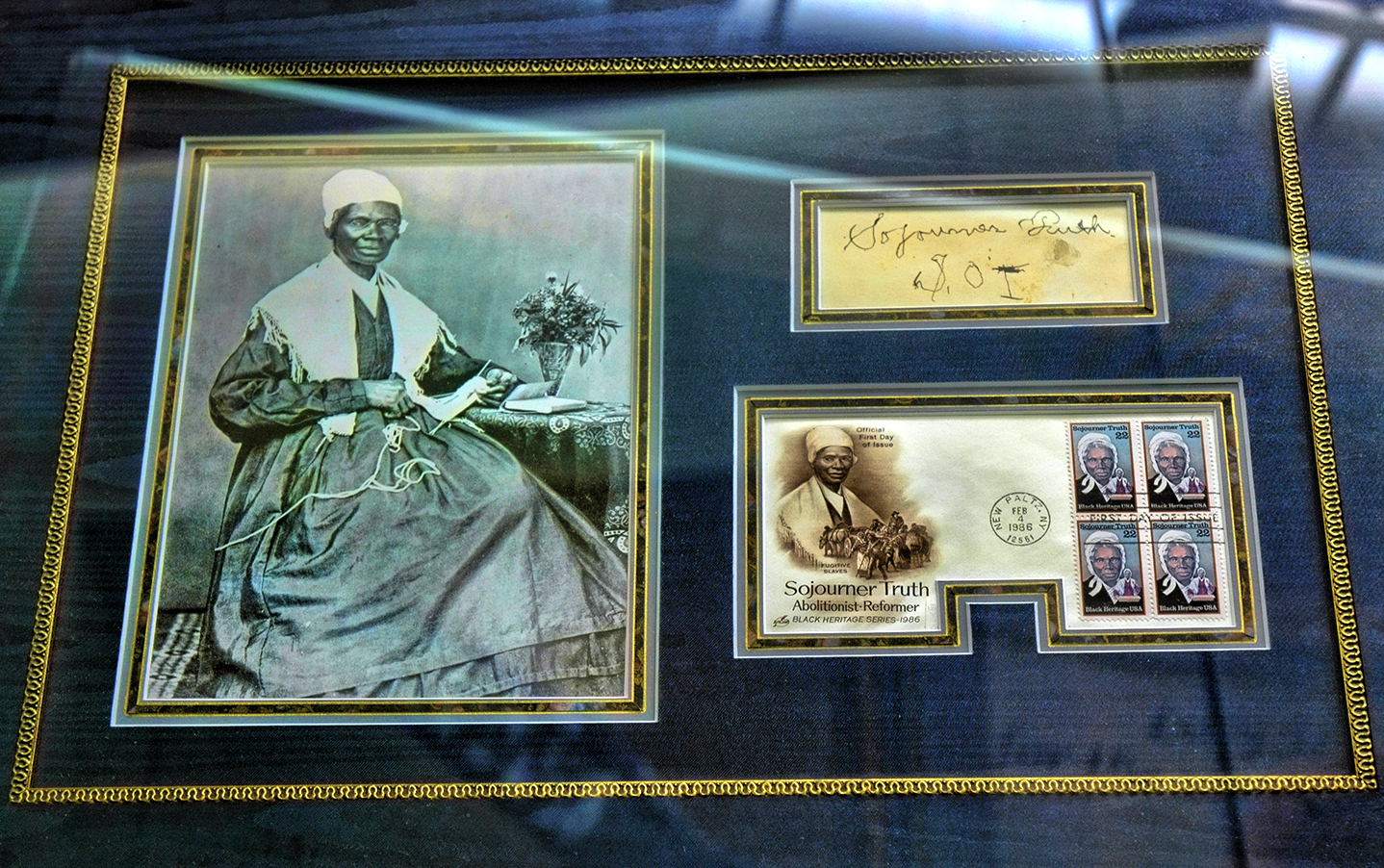
There is a long and complicated history to the suffrage movement and it is now being shared with the world as part of The University of Georgia’s Special Collections Library. In fact, 2010 marked the 90th anniversary of the movement.   The collection is available to researchers everywhere . It includes a variety of items from both sides of the movement For example, did you know the original 99ers were those opposed to women voting? The Georgia Association Opposed to Woman Suffrage believed granting women the right to vote would lead to “the final undoing of our government” and produced a pamphlet entitled Unchaining the Demons of the Lower World: A Petition of Ninety-Nine Per Cent Against Suffrage. The pamphlet is available along with writings and artifacts from Frederick Douglass, Harriet Tubman and Sojourner Truth. It’s an interesting peek into an era many of us know little about.

Debby Yoder is a Social Shutter Contributor and is working on her Bachelor’s Degree in Sociology at Georgia State University. She comes from a long line of photographers — including her father — and enjoys documenting a variety social issues and scenes. She can be contacted at debby.yoder@gmail.com.

Originally posted July 14, 2012 at: http://socialshutter.blogspot.com/2012/07/1970-year-women-finally-got-right-to.html

Caribbean Proud

Thursday, July 5, 2012

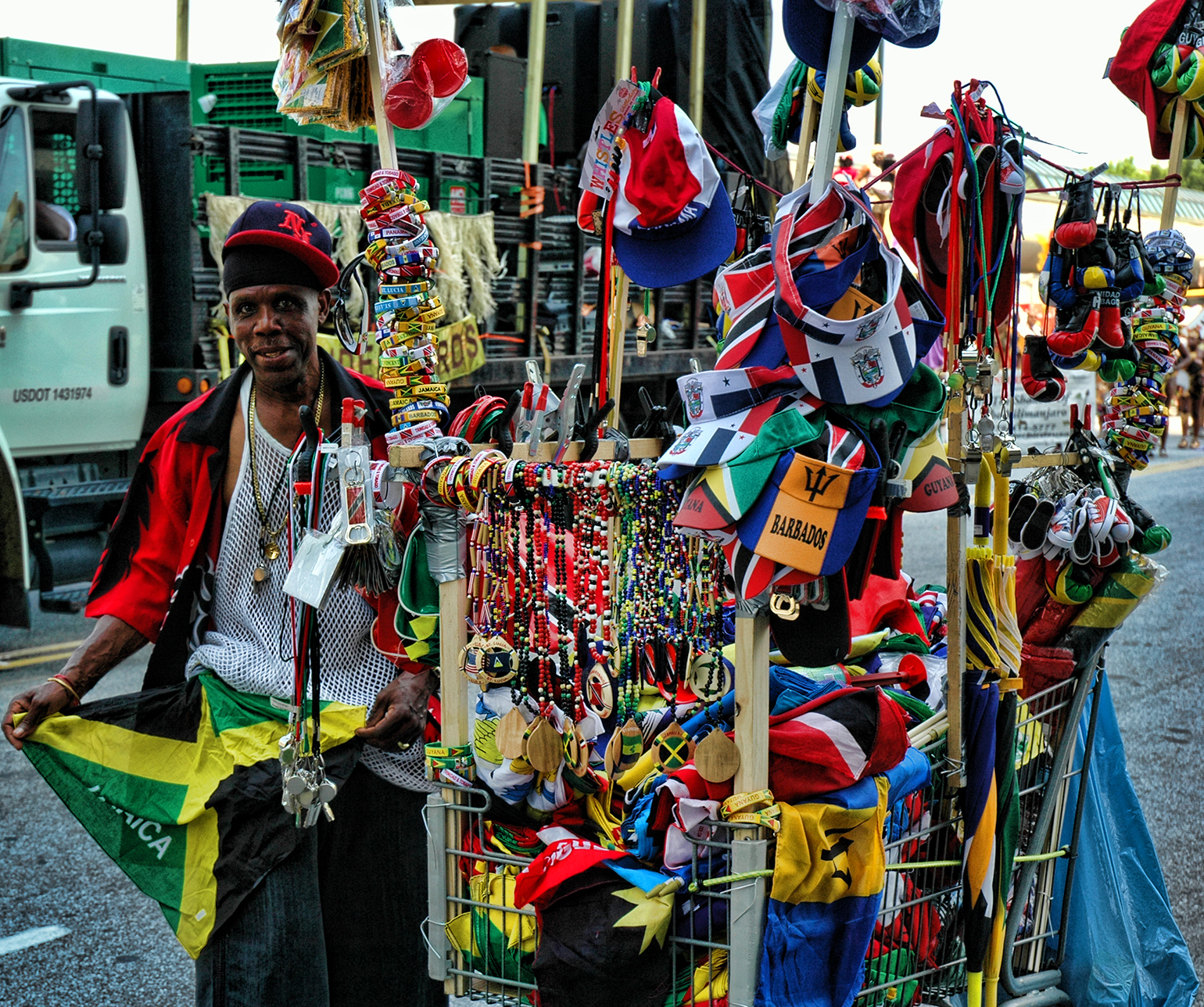
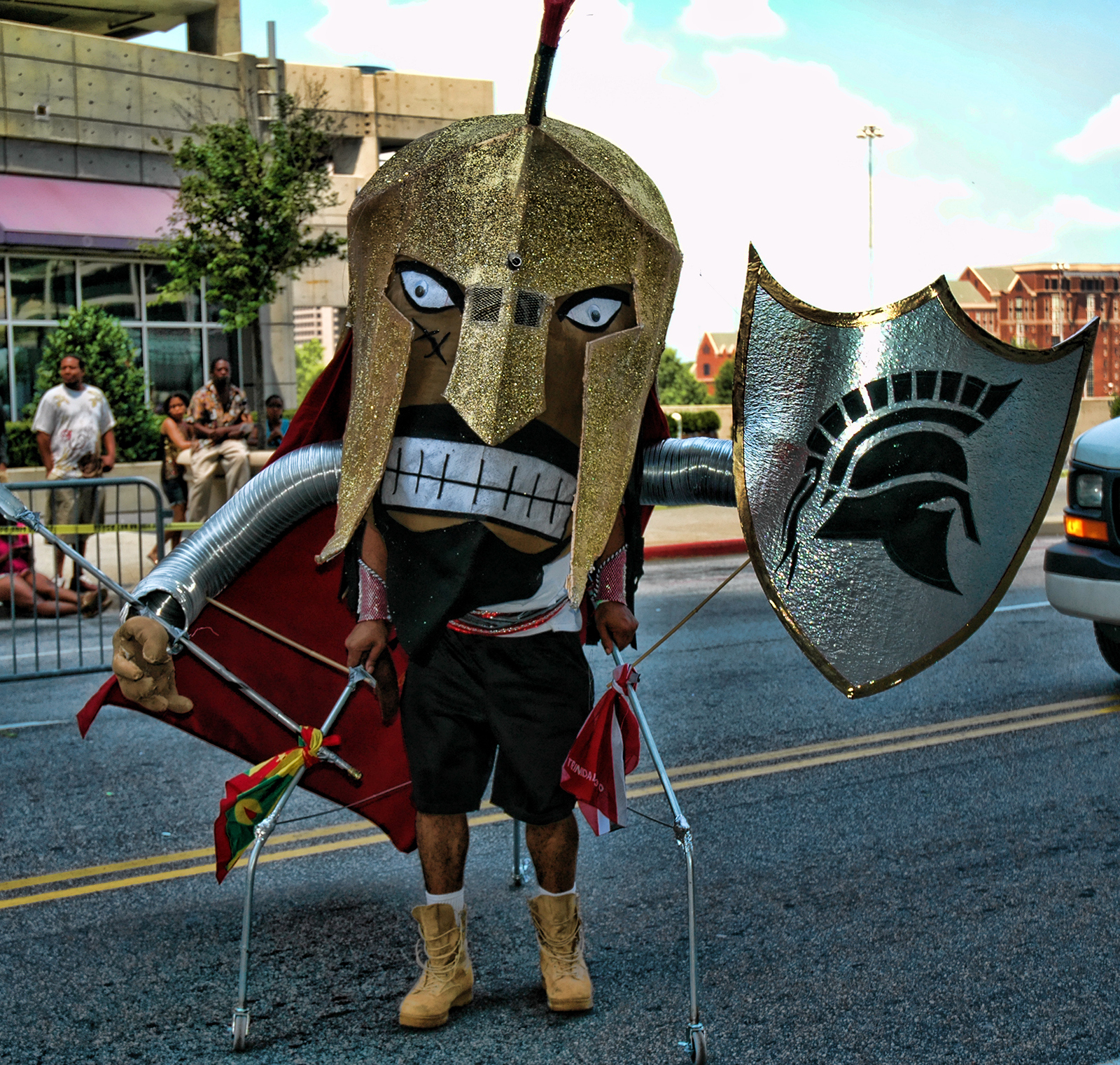
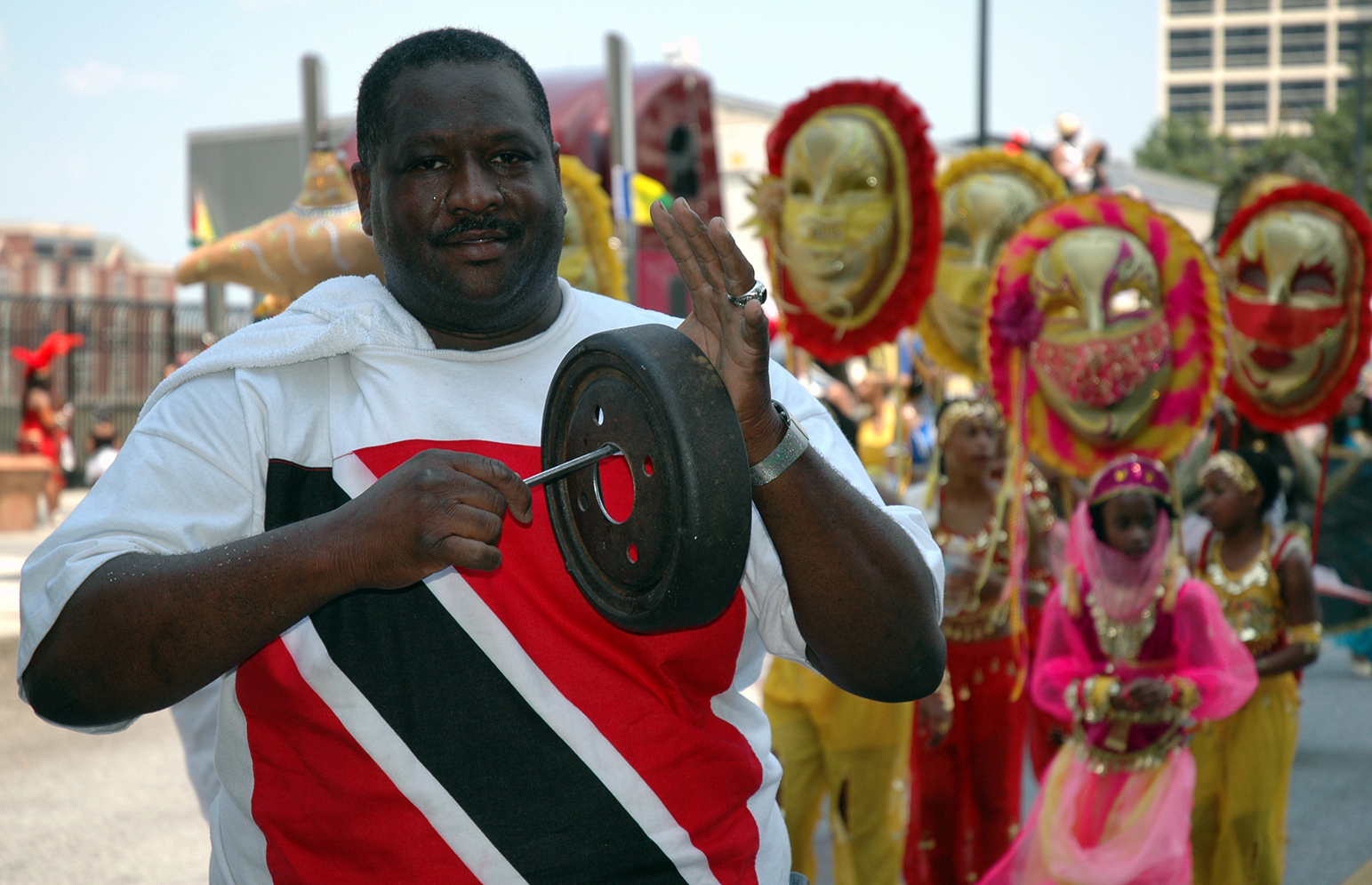
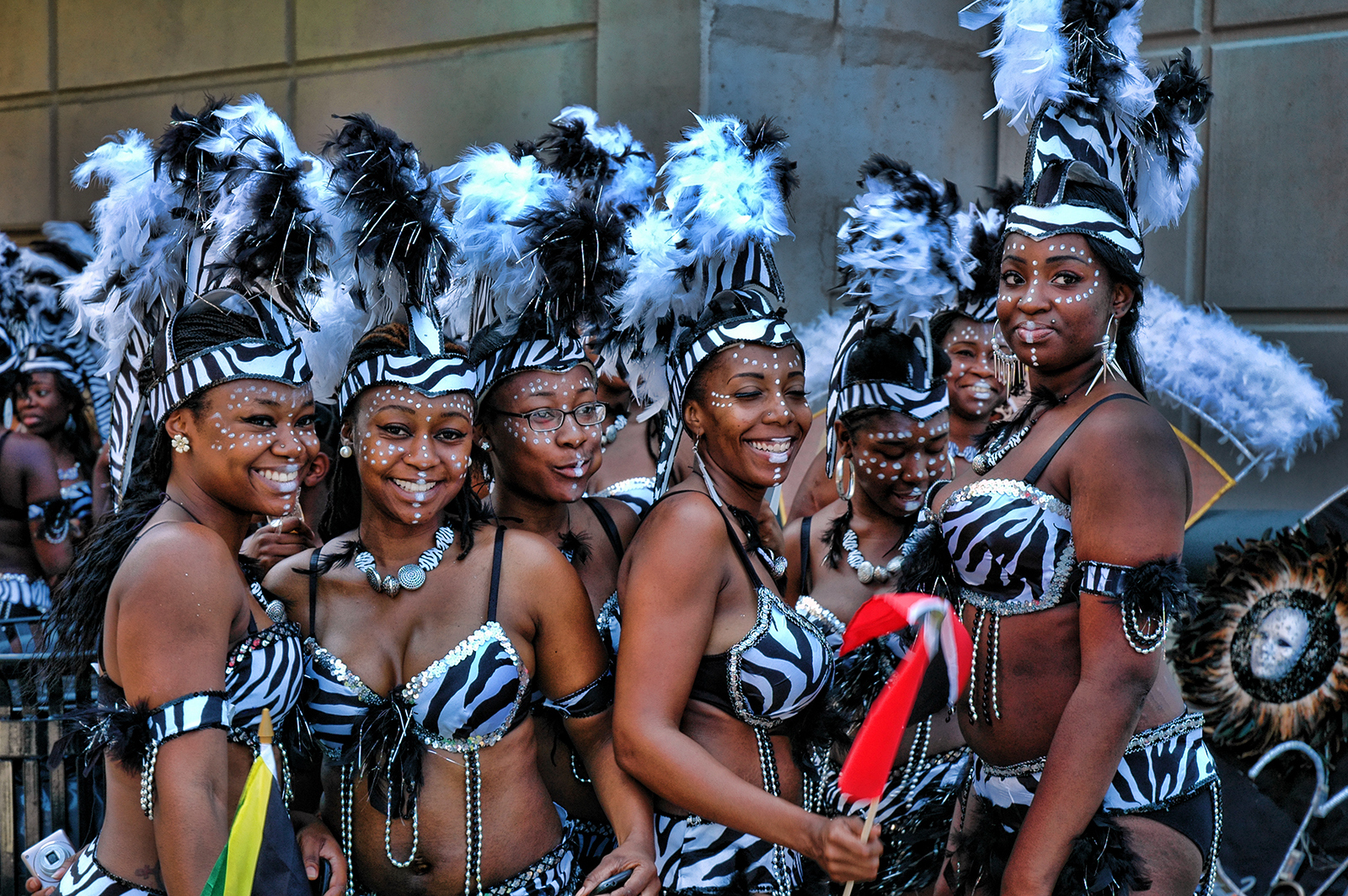
Posted by Debby Yoder, ATLANTA, GA —  Atlanta boasts a rich and diverse Caribbean culture with most of the 28 island nations represented.  Recently the city’s 24th Annual Caribbean Carnival was held downtown. This famous parade began on West Peachtree Street and wound to the Sweet Auburn District for an all-day festival. There were more than 30 masquerade bands, marching bands, and steel bands delighting the thousands of spectators with beautiful costumes and a variety of musical traditions. And in the Sweet Auburn festival village there was more: foods from every region of the Caribbean, and lively musical performances throughout the day. The annual tradition has become the third largest Caribbean festival in the country, and this year featured Jamaica for its 50 years of independence. Everybody had a good time and I am looking forward to the city’s Caribbean Jerk Festival happening over Labor Day weekend.

Debby Yoder is a Social Shutter Contributor and is working on her Bachelor’s Degree in Sociology at Georgia State University. She comes from a long line of photographers — including her father — and enjoys documenting a variety of urban scenes. She can be contacted at debby.yoder@gmail.com.

Originally published July 5, 2012 at: http://socialshutter.blogspot.com/2012/07/caribbean-proud.html

College Town Poverty

Saturday, May 12, 2012

Posted by Debby Yoder, ATHENS, GA — When most people think of Athens they think of the University of Georgia, REM, the B-52s, and college football. A community bustling with the energy of young people preparing for their future and enjoying college life. But just a short half mile from campus pervasive poverty is evident. In fact, Athens has one of the  highest poverty rates in the country. In 2009, the incomes of 44.9% of its residents were below the federally-established poverty line (compared to a statewide figure of 16.5%). Critics argue that the student population inflates this rate. But even if you omit single individuals, 34% of Athens’ families are below the poverty line and three of its elementary schools have 100% of studentson the free-and-reduced lunch program.

One of the biggest problems the community faces is a the lack of quality, affordable housing. Student housing is readily available, but families with children struggle to find decent homes. A result is a patchword pattern of housing quality.  You walk down one block lined with well-kept affluent homes and beautiful fraternity houses (although I’m sure there are noise issues on the weekends). You walk down the next and see dilapidated homes and make shift trailers. The more destitute areas are mixed with industry, leaving a foul stench in the air. Still, the people who live in these neighborhoods have a generosity of spirit and humor that you would never find in the more affluent ones. I came across a  group of aging gentlemen sitting on a porch, laughing and spinning tales to outdo each other on a Friday afternoon. Their lively energy cast against the impoverished setting is an image that will likely never be recorded. “Photographers aren’t welcome, they said with a smiling wink.” They started laughing and I joined in. I had the feeling I could have talked them into sitting for a photograph but I didn’t want to intrude. Still, in the back of my mind I was thinking that this everyday situation I happened upon will probably only be seen by those like themselves– or the few passersby like me…never in a newspaper nor on TV unless something bad happens..a murder, drug bust, or anything else to further impound on the general public’s brain that people who live in poverty are not good. The gentleness and normality of these gentlemen’s Friday afternoon story telling remains invisible to the larger world.

Debby Yoder is a Sociology major at Georgia State University. She loves meeting new people and discovering the world around her. Debby can be reached at debby.yoder@gmail.com.

Originally posted at: http://socialshutter.blogspot.com/2012/05/college-town-poverty.htmlhttp://socialshutter.blogspot.com/2012/05/college-town-poverty.html

Raise Your Hood to Stand Your Ground

Saturday, April 14, 2012

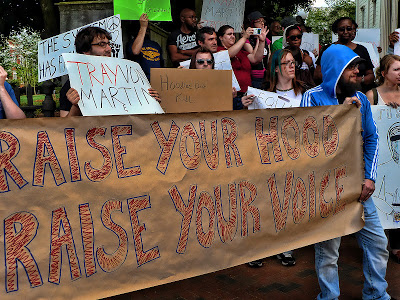
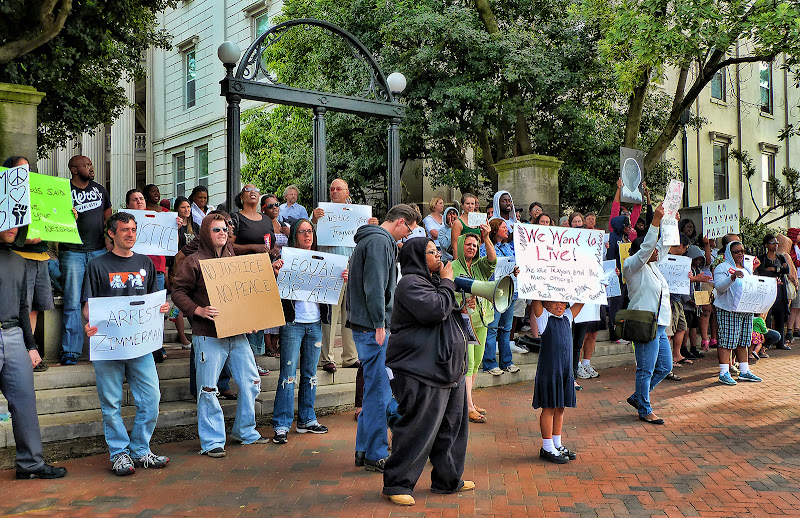
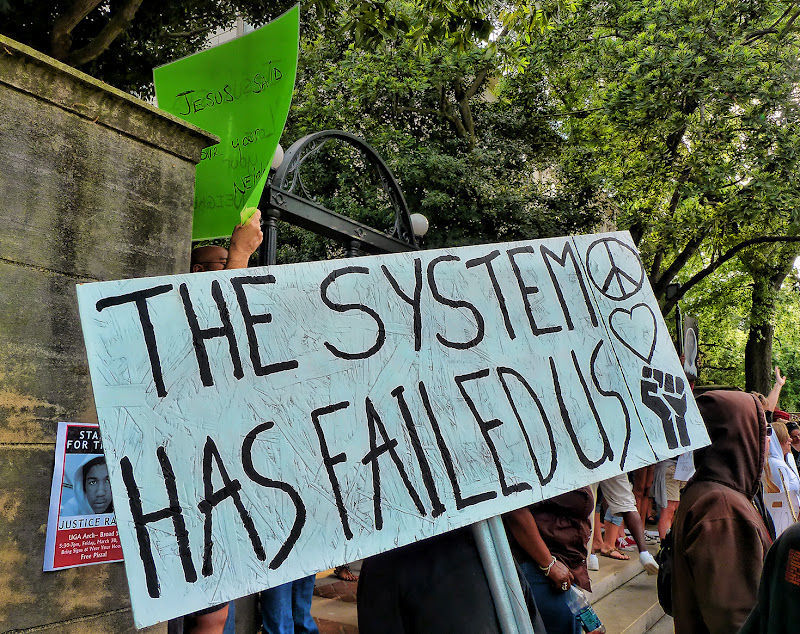
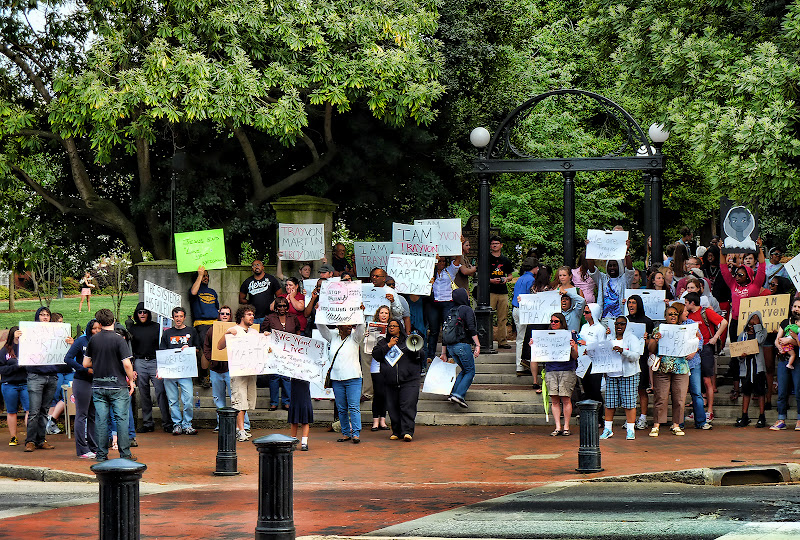
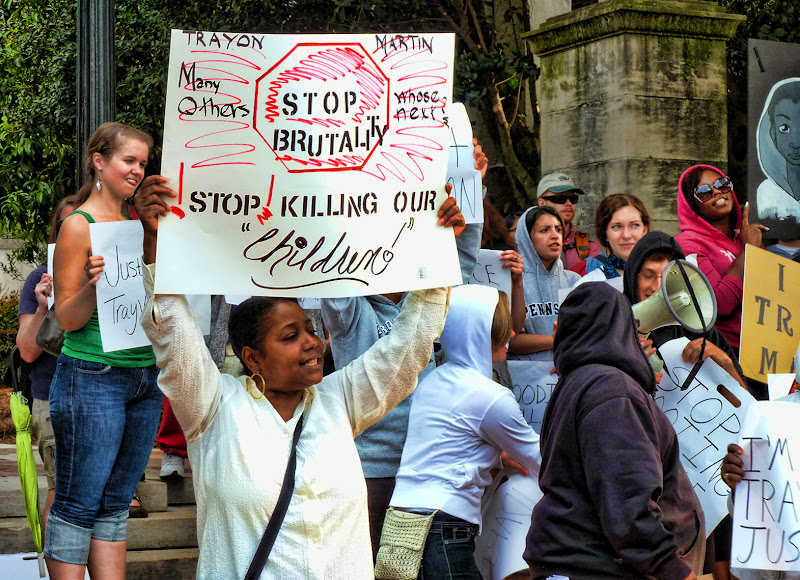
Posted by Debby Yoder, ATHENS, GA — Like at many universities and colleges all over the country, a rally was recently held at the University of Georgia (UGA) Arch to bring attention to the case of Trayvon Martin, an unarmed 17-year-old that was killed while walking home from a convenience store. He was shot dead by a self-appointed neighborhood watch captain who assumed Trayvon, a young Black man with his hoodie up, was up to no good. Ironically, the teenager, who was walking back to his father’s fiancée’s house in the community, only had Skittles and a bottle of ice tea in his pockets. At the rally the diverse crowd waved, raised their signs and called out to motorists passing by to honk in support. “Hoodies Don’t Kill,” read one of the signs. “Raise Your Hoods,” read another. Protestors were met with much support and enthusiasm.

Yes, hoodies don’t kill, and just last week the Prosecutor in the Martin case brought charges against the shooter, 28 year-old George Zimmerman — perhaps prompting people who have been following the case to put on their hoodies as a sign of solidarity. Nonetheless, while hoodies may have become signs of injustice and solidarity, at the heart of this tragedy is Florida’s controversial “Stand Your Ground” law, enacted in 2005. Interestingly, this legislation was opposed by sheriff’s offices and district attorneys across the state but heavily backed by the National Rifle Association(NRA). Since its passage the number of “justifiable homicide” claims has tripled.

At UGA’s rally, one pedestrian, a White man in his 60’s, heckled the protesters with angry hateful threats as he walked by. His taunts were met with restrained eye rolls and little direct focus, as if there was fear among the crowd that he might have a gun. This made me wonder what would have happened if someone had “stood their ground” against his threats. After all, Georgia does protect this right just like Florida. But perhaps the crowd had already done that in a non-violent way by raising their hoods.

Debby Yoder is a Sociology major at Georgia State University. She loves meeting new people and discovering the world around her. She can be reached at debby.yoder@gmail.com.

Originally posted at: http://socialshutter.blogspot.com/2012/04/raise-your-hood-to-stand-your-ground.html